


Prime Minister Sanae Takaichi secured a massive supermajority in the February 2026 elections by reading the room.
Her winning message?
Revitalize the economy, strengthen national defense, and above all, enforce a hard cap on immigration.
This bears an eerie resemblance to "Sakoku 2.0", a term popularized during the Covid-19 pandemic referencing Japan's historical era of absolute national isolation.
This policy is fiercely contested globally. For one of the most rapidly shrinking countries on earth, embracing immigration seems essential for economic survival.
But what do the Japanese people think?


So far, they seem to love it!
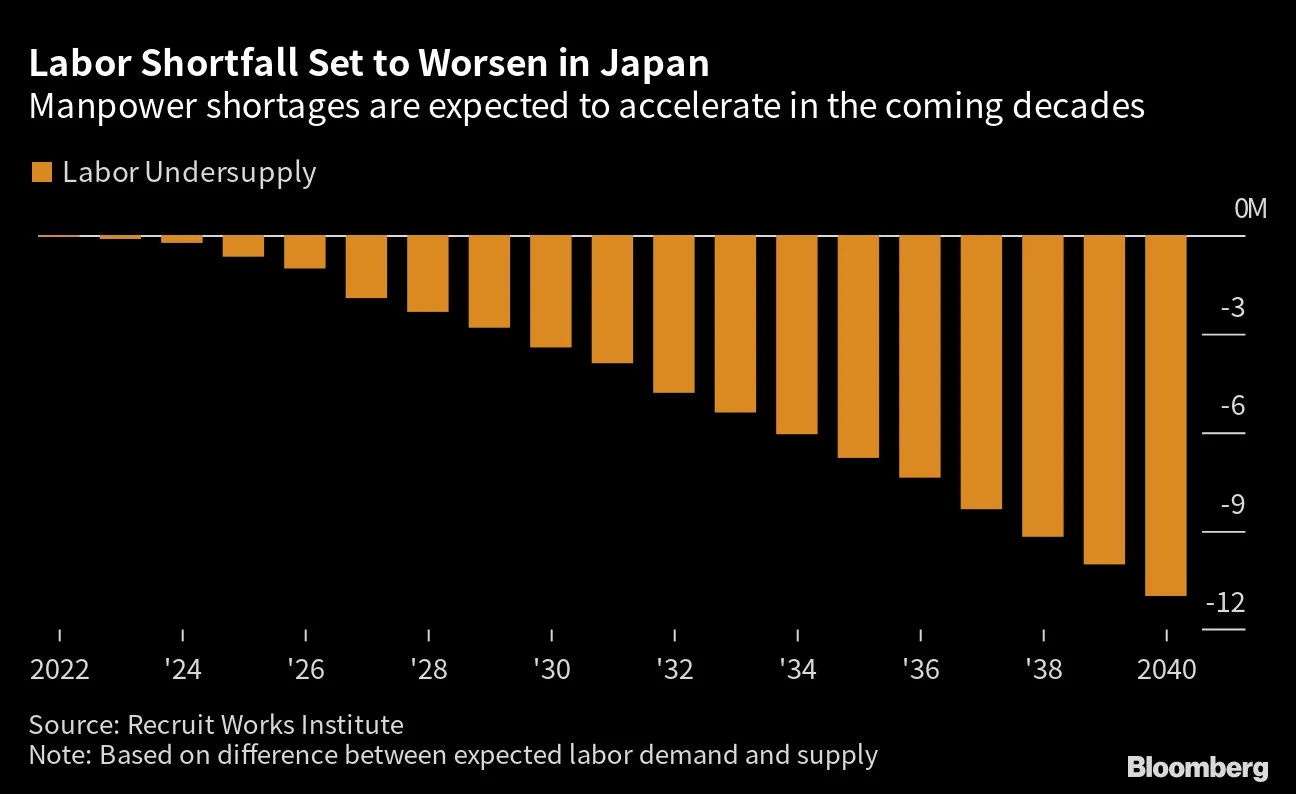
This might sound strange in a country where basically everyone is aware that they will face a catastrophic labor shortage of 11 million workers by 2040.
People in favor of restricting immigration in Japan argue that Japan will survive this demographic collapse without mass immigration by simply automate everything. In fact, the government themselves claims Japan will capture 30 percent of the global market for physical AI by 2040, seamlessly deploying robots into nursing homes, restaurants, farms and construction sites.
I find this techno-utopian fantasy completely unrealistic.
Sure, Japan boasts incredible hardware engineering, but the country is notoriously terrible at software adoption and administrative modernization. Furthermore, Japan’s robotics leadership is actively slipping. The industry is shifting from rigid industrial arms to general-purpose robots powered by advanced AI, and Japan currently trails both the United States and China in key research and component production. We are not going to see 11 million humanoid robots walking the streets of Tokyo and Osaka to save the economy.

But maybe an economic fallout for curbing immigration is a price worth paying?
Many of you probably agree with Japan's hardline stance on immigration. Watching the disruption caused by mass migration across the West, Japan appears to be actively avoiding the same pitfalls. I see this view all the time on X and in my own comment section, and frankly, I agree there is merit to tightening the borders.
But a strict zero-immigration policy collides with one terrifying reality: No country in history has successfully reversed a falling fertility rate, and Japan shows zero signs of breaking that trend. Without immigration, a rapidly shrinking population is a mathematical certainty.
This leads to two massive issues for Japan:
First, Japan’s insane national debt and its failing public pension system.
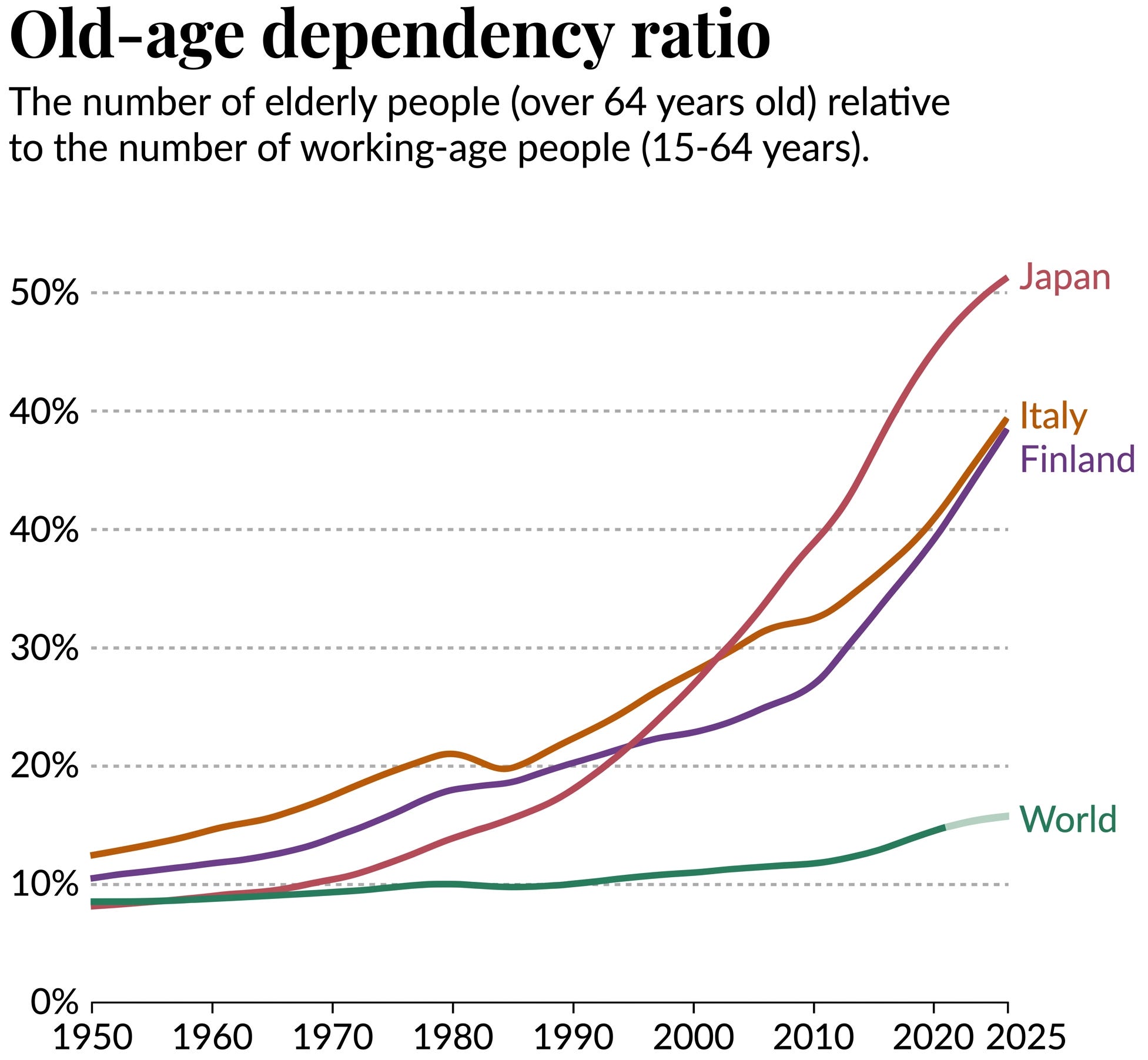
This is the structural elephant in the room. Japan’s dependency ratio (the number of retirees aged 65 and above compared to working-age people) is rising sharply. It will hit 60% by the early 2030s and a staggering 80% before 2050. You have a rapidly shrinking pool of workers funding a massive, aging cohort.
Without a massive influx of immigrant tax money to prop up the system, the government is executing a strategy of managed financial retreat. The state has already introduced a “macroeconomic slide” formula. This mechanism automatically keeps pension increases below wage growth and inflation, effectively cutting benefits over time. By 2040, the average pension level will be slashed by approximately 20 percent.
Because of this, we are staring down the barrel of widespread elderly poverty. Elderly households already constitute the largest category of public assistance recipients in the country. To stabilize national finances without immigrants, some academic models suggest the government would need to push the consumption tax to an impossible 40-50%. Since that is political suicide, the state will likely monetize the debt. This will trigger inflation that further erodes the purchasing power of fixed-income retirees. The government will simply force the elderly to work well into their 70s out of sheer survival necessity.
Second, a massive emptying out of Japan.
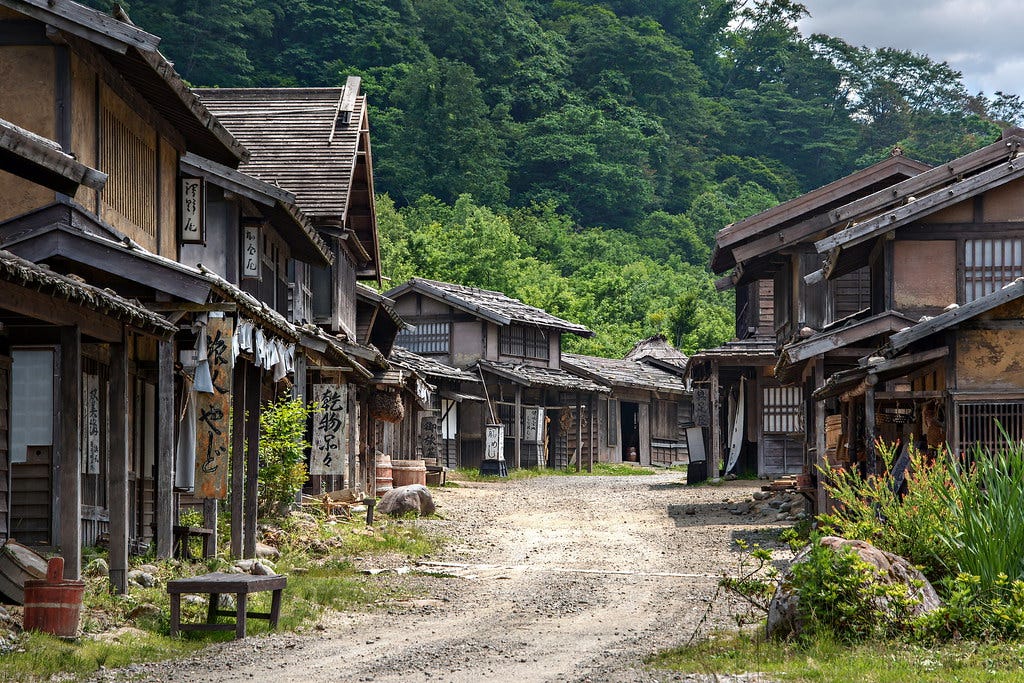
We are going to witness the death of the Japanese countryside.
According to the influential Masuda Report, without immigration, nearly half of all municipalities in Japan are at risk of vanishing entirely by 2040. By 2050, roughly 20% of regional areas could lose all of their inhabitants. Places like Akita, Aomori, and Kochi will see their populations plummet by over 30%.
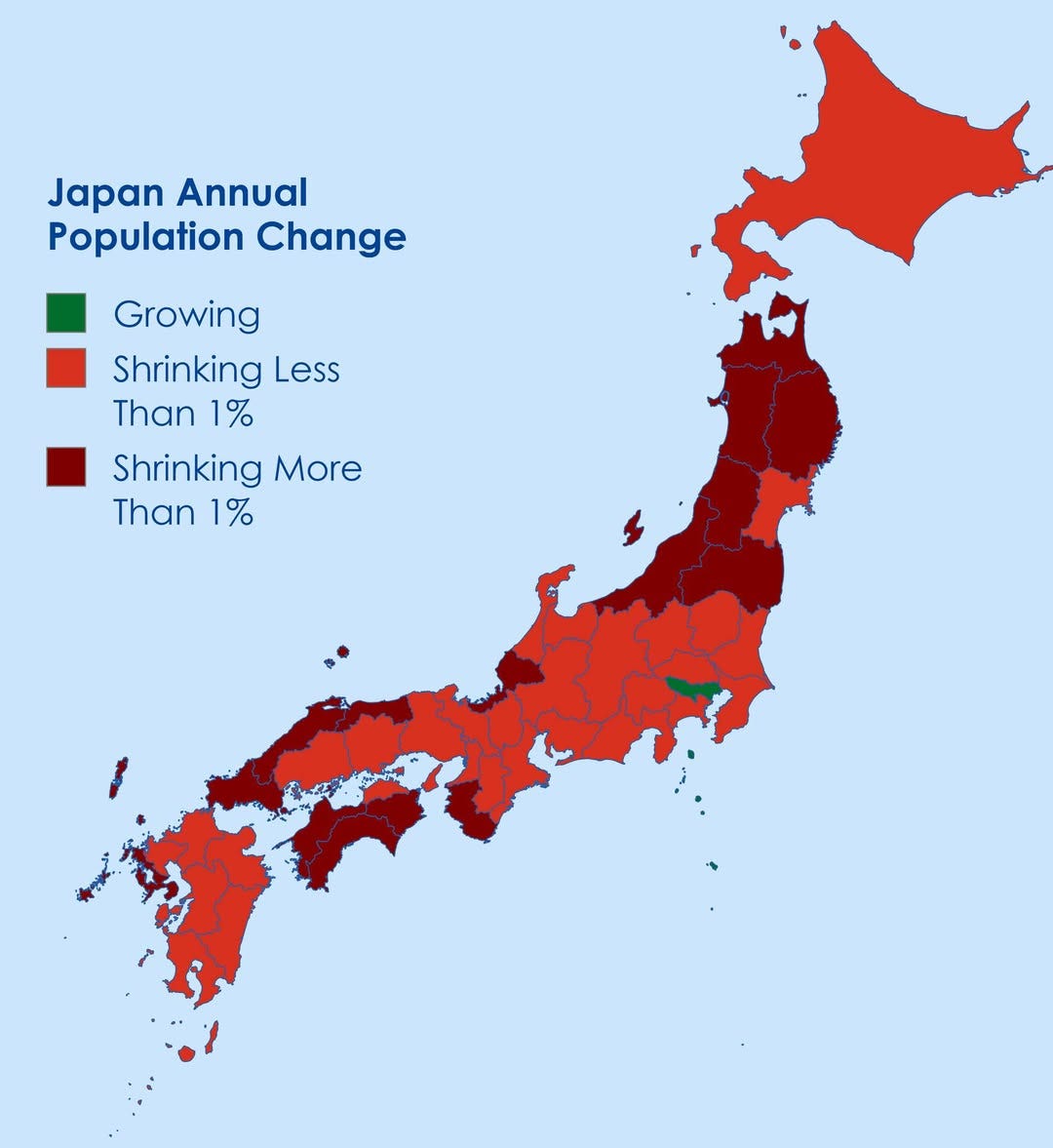
As local tax bases evaporate, regional governments will go bankrupt. They will lose the ability to maintain roads, water systems, and power grids. The only rational response for young people is to pack up and abandon these areas.
If there is one silver lining, if you can call it that, it is that major cities in Japan will see a “population boom”, as the young people are abandoning their rural communities. The population will condense into a few highly efficient mega-cities like Tokyo and a handful of regional survivor hubs.
There is hope
However, some smaller cities are already countering this trend using the "compact city" model, with Toyama City serving as a highly successful prototype.

These survivor cities will be dense and hyper-concentrated around major public transit stations. The government will deliberately pull funding from sprawling suburbs and force residents into these walkable urban cores to drastically reduce the cost of delivering public services.
Is it a great solution? No, but it might be the only way for smaller cities in Japan to survive.
How will Japanese companies survive the labor shortage?
In the corporate world, I think I have a bit of a unique take now with the AI being so prevalent.
The return of the salaryman
I think we’ll see a resurgence of the traditional Japanese “salaryman,” heavily augmented by AI.
Artificial intelligence currently replaces specific tasks rather than entire jobs. The software is jagged. It excels at some things and fails spectacularly at others. This means companies cannot just fire their accounting departments and buy an algorithm.
Instead, large corporations will hire human generalists, something Japan Inc loves to do already. Their entire job will be to supervise flawed AI outputs, plug operational gaps, and physically intervene when the software inevitably breaks. Because these workers accumulate deep, firm-specific knowledge about how their particular company’s AI systems operate, they will become highly valuable assets. Japan’s cultural comfort with lifetime employment makes it uniquely suited for this specific kind of generalist labor market.
There will be no silver bullet for the workforce deficit
But augmenting office workers only solves part of the equation. What about the millions of missing physical laborers, service workers, and rural producers?
Take agriculture.
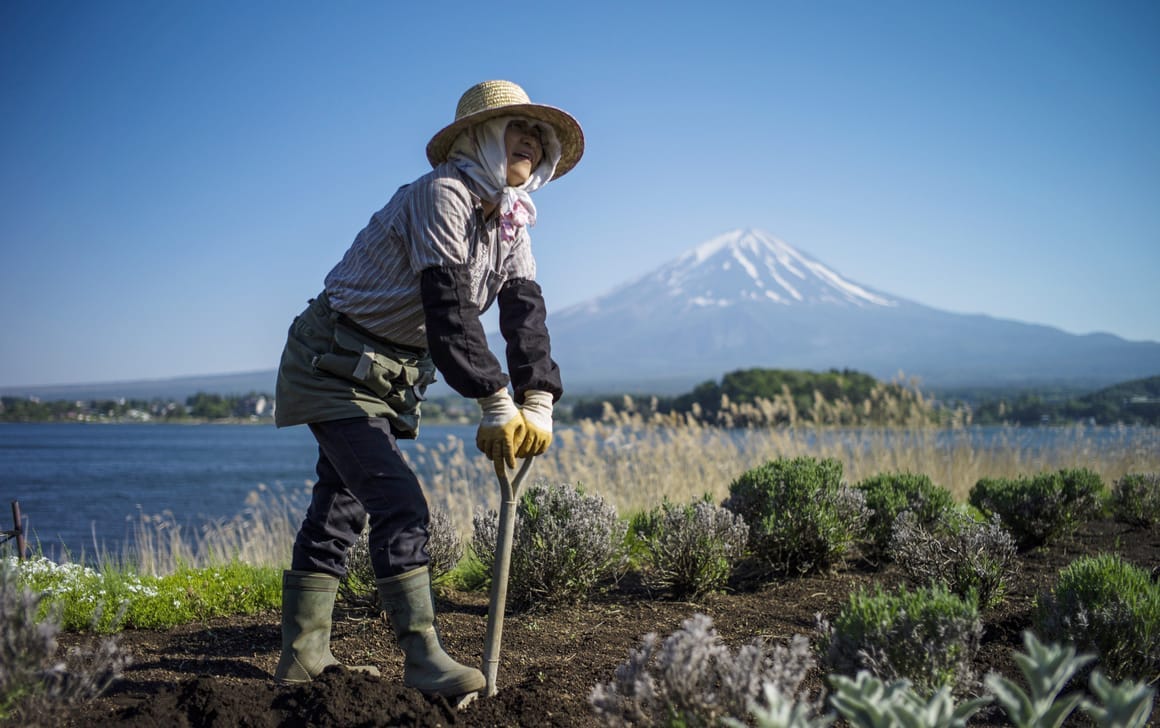
The average Japanese farmer is already pushing 70 years old. Without the controversial foreign trainee programs that previously funneled cheap labor into rural areas, domestic food production is going to crater. We will likely see a liberalization of farming laws which will result in the death of the small family farm, replaced by automated corporate agribusinesses, but overall, Japan’s food self-sufficiency will plummet.
Zombie companies will be replaced be monopolies
In the broader economy, the brutal truth is that thousands of companies simply won’t survive, but this might not be such a bad thing at first glance.
Japan is notorious for its zombie companies, unproductive, inefficient small-to-medium enterprises kept on life support for decades by zero-interest loans and government subsidies. Without an underclass of cheap, imported labor to exploit, these businesses will go bankrupt en masse.
This will lead to an era of ruthless hyper-consolidation. As the zombies die, the surviving workforce will be absorbed by a few large, capital-rich corporations.
On the bright side, because these mega-corps will be fighting to the death over a shrinking pool of available workers, we are going to see a massive spike in wages. The era of stagnant Japanese paychecks will end out of sheer demographic desperation.
Paradoxically, this hyper-consolidation means Japan’s stock market could actually boom. As the Nikkei giants absorb the market share of thousands of dead small businesses, corporate profits at the top will concentrate. We are looking at a starkly two-tiered economy: Aggregate GDP will shrink, but the remaining mega-corps will become wildly profitable monopolies.
But this wage growth and market concentration triggers a debt bomb. Rising wages mean sticky inflation. To fight that inflation, the Bank of Japan will have to raise interest rates. And when interest rates rise in a country with a national debt over 250% of its GDP, the government’s debt servicing costs will go fully parabolic.
The surviving monopolies will be the only ones able to afford to invest in the AI, automation, and higher wages required to keep operating. For the everyday consumer, this means the death of hyper-convenience. 24/7 convenience stores will slash their hours. Next-day delivery will become a premium luxury.
The inconvenient truth is that without migration, companies won’t magically replace 11 million workers; they will simply force consumers to accept less, while squeezing maximum productivity out of their remaining, AI-augmented human generalists.
Ultimately
If Japan actually locks the door on immigration, the result is a fascinating contradiction: the stock market will boom while the actual economy shrinks. As millions of workers vanish, thousands of small businesses will simply die off, leaving the surviving mega-corporations to scoop up all their customers and become wildly profitable.
But the stock market’s win is the everyday consumer's loss. For the average Japanese citizen, the legendary era of cheap, flawless convenience is over. They are going to wake up in a drastically more expensive country where basic services cost a premium, everything closes early, and the bill for a shrinking nation is paid entirely out of their own pockets.
Conclusion
If the Takaichi administration actually means what it says about immigration, they are making a massive trade-off. They are choosing social cohesion over economic growth. They are willing to accept a smaller economy, strained pensions, and dead rural towns as the price for keeping their core cities safe, clean, and culturally familiar.
I think this is the ultimate macroeconomic experiment of the 21st century.
Japan is proving that a modern society can look at the social fragmentation happening abroad and simply say no. They are choosing to manage their own decline, becoming smaller, older, and poorer on paper, to protect their way of life. The transition will be brutal, defined by vanishing services, soaring taxes, and empty neighborhoods. Ultimately, the everyday citizen will have to look around at this shrinking, expensive new reality and ask themselves a very uncomfortable question:
Is the price of a pure Japan worth the pain of a poorer one?
Sources:
National Institute of Population and Social Security Research (IPSS) - Population Projections for Japan: This report outlines the official demographic forecasts, projecting a 30% population decrease and an elderly population of around 40% by 2070.
Immigration Services Agency of Japan - Statistics on Foreign Residents: These official government press releases contain the data showing that the number of foreign residents recently surpassed 4 million, largely driven by new worker visa programs.
OECD - Recruiting Immigrant Workers: Japan 2024: This comprehensive international review examines how Japan has altered its long-standing migration policies to recruit foreign workers in response to severe, widespread labor shortages.
Japan Institute for Labour Policy and Training (JILPT): This government-affiliated agency provides extensive English-language research reports detailing Japan’s acute labor shortages and the emerging impact of AI on domestic employment practices.
Recruit Works Institute - Future Predictions 2040 in Japan: This report details the demographic simulation predicting a structural labor shortage of 11 million workers across Japan by 2040.
Global Market Insights / METI - Physical AI Strategy: Outlines the Japanese government’s strategic target to capture 30 percent of the global market for physical AI and robotics by 2040 to offset the workforce deficit.
Japan Policy Council / Population Strategy Council (Masuda Report): These reports provide the demographic projections showing that nearly half of all municipalities in Japan are at risk of vanishing entirely due to population collapse.
World Bank - Toyama City Compact City Case Study: A comprehensive international review of Toyama City’s successful urban redesign to adapt to a shrinking and aging population using the compact city model.
Mitsubishi Research Institute & Ministry of Finance - Pension Projections: These analyses provide economic estimates on Japan’s dependency ratio, the impact of the macroeconomic slide, and the projected reductions in public pension benefits.
Shrinking the sprawl and concentrating around existing train lines is a really good idea, totally support it! It pains me to see my taxes spent on 10-lane highways in the middle of nowhere :’(
Very rural (mountains) Niigata checking in. 2 toddlers. Working on #3. Takaichi-san would do well to further promote pronatalist culture and countryside living with remote work and incentives. Homesteading is super popular everywhere for a reason. Often, the people countryside have a pretty high birth rate, it's just that the population is bled off to Tokyo and other larger cities.
Automation in farming is already here, robodeliveries and robotaxis are here as well. Unfortunately, further automation, AI and even immigration won't solve the issues, people need to have families.