


Disclaimer: This article is for informational and educational purposes only and does not constitute investment advice. I may hold positions in some of the securities mentioned. Please do your own research and invest at your own risk.
For Part 1 & 2 of this series on Japan’s FinTwit (www9945 and Mikimaru), see:

&

If Mikimaru is the perks-loving small-cap hunter and www9945 is the street-scouting everyman, then Kabu1000 is Japan’s final boss of retail investing.

Kabu1000 has been around the investing scene forever!
He started in the late 1980s with just ¥400,000, never took a ”normal” job, and methodically turned that stake into over ¥900 million. Today he’s widely seen as Japan’s most famous individual investor, and the purest expression of classic value investing in the country.
What makes him different is how he got to 1000x his money: By obsessing over balance sheets, only touching stocks that trade below their intrinsic value, and insisting on a margin of safety big enough that he can sleep at night. He loves the kind of companies most people scroll past; asset-heavy industrials, land-rich old-economy names, small caps trading at a steep discount to book, especially when there’s a realistic catalyst like a buyout, restructuring, or asset sale.
Kabu1000 builds a tight portfolio of roughly 20–30 names where downside is protected by hard assets and upside comes from Japan-specific tailwinds: Tokyo Stock Exchange pressure on low-P/B stocks, rising buyouts, and governance reforms slowly forcing lazy balance sheets to work harder.
In this final part of the series, I’ll walk through his journey, the principles he refuses to compromise on, his holdings, and what the rest of us can steal from Japan’s most famous retail investor.
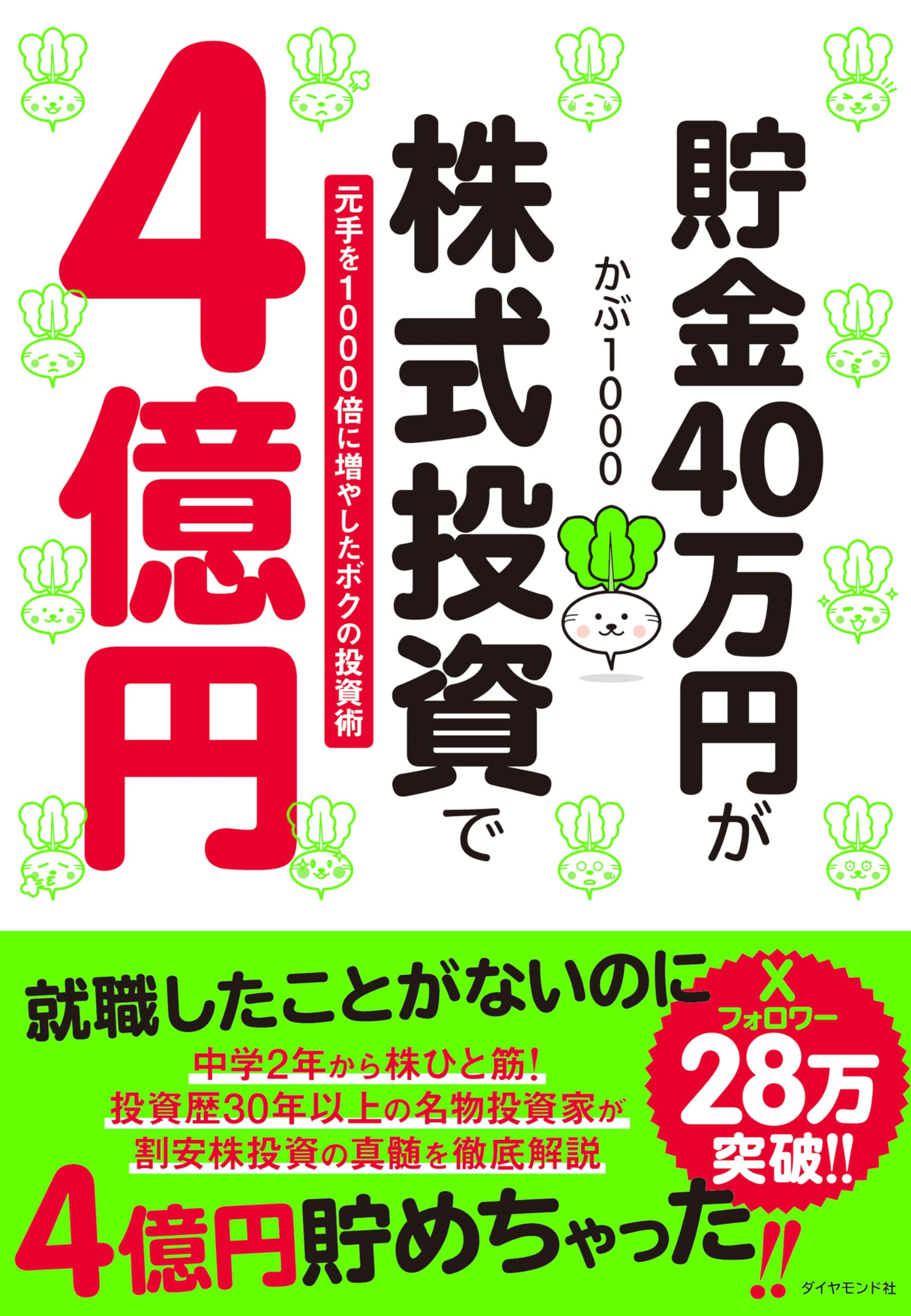
Kabu1000’s Journey
If one individual bridges Japan’s past and future of value investing, it’s Kabu1000 (かぶ1000 - which means “Stock 1000x”).
He started investing as a middle-schooler in 1988, turned ¥40万 (≈$3k) of savings into ¥9億 (≈$7.5 million) over time (a 1000-bagger gain, which inspired his moniker), and by 2011 had reached the “億り人” seven-figure club. As of 2026, he has 38 years of market experience, has authored multiple investment books, and boasts 350,000+ followers on X.
Despite this fame, Kabu1000 is known for his almost academic rigor and humility. He frequented a local brokerage in junior high, amassed ¥3 million by 9th grade, ¥10 million by 10th grade, and ¥15 million by 11th grade through savvy stock plays.
After finishing a finance vocational school, he even declined a job offer from a securities firm to go full-time investor straight away. In his late 30s, he achieved a ¥100 million portfolio, and by early 2026 his cumulative trading profits officially hit the monumental ¥900 million mark (not including dividends).
Remarkably, he’s never held a traditional job or even a side gig. A “rooted-from-birth professional investor”, as one article put it. With this lifetime of experience, Kabu1000 has become a sort of philosopher of value investing in Japan, often sharing wisdom in interviews and lectures. (His recent book is literally titled “The Way to Become a Wise Individual Investor”).
Kabu1000’s Investment Philosophy
At the core, Kabu1000’s investment philosophy follows classic Graham-and-Buffett principles, distilled into a few key tenets he often cites.
First, investing is about thorough analysis, principal protection, and adequate returns; anything that doesn’t meet those criteria is speculation.
Second, never put all your capital in one basket, taking on excessive risk will lead to mental anguish and ruin.
Third, the difference between an investor and a speculator is attitude toward market fluctuations: The speculator tries to predict price moves to make a quick profit, while the investor focuses on acquiring good securities at good prices and holding them.
Fourth, he aggressively preaches the margin of safety. Kabu1000 takes Benjamin Graham’s classic playbook and applies it to Japan’s notoriously cash-rich, low-valuation market. He hunts for asset-heavy companies trading at rock-bottom P/B ratios, buying deep discounts and holding until a catalyst, like a buyout, restructuring, or activist pressure, unlocks the trapped wealth.
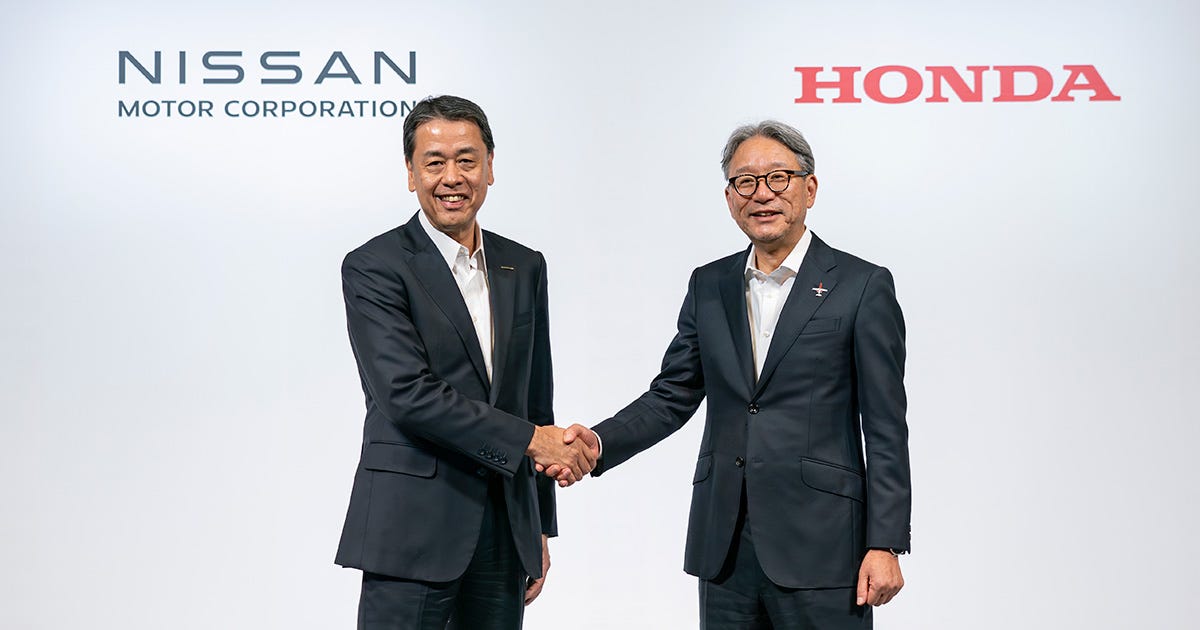
The Tokyo Stock Exchange’s 2024 push to raise ROE perfectly validated his strategy, sparking massive buybacks and dividend hikes among low-P/B stocks. He expects this value-unlocking trend for “低PBR、低PER銘柄” (low P/B and P/E names) to accelerate alongside rising M&A. As major corporate shake ups, like the previously rumored Honda-Nissan alliance, force lucrative asset sales, his playbook is simple: Buy these hidden gems long before the market wakes up.
Kabu1000 typically runs a fairly concentrated portfolio (around 20–30 stocks), much smaller than www9945’s hundred-plus names. “I keep about 20 core holdings, focusing on those with the highest expected value and aligning with my time horizon,” he wrote for his 2025 strategy.
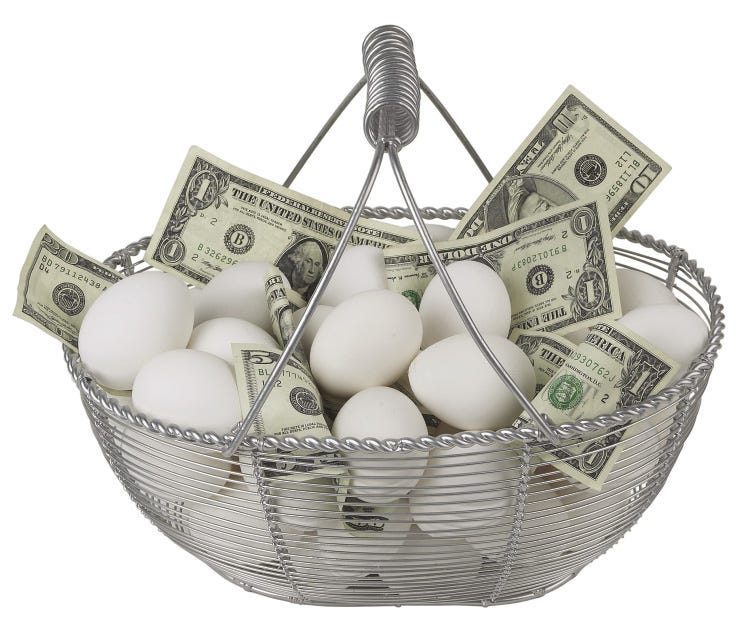
He finds that number strikes a balance between concentration and diversification, enough to avoid the “all eggs in one basket” pitfall he warns against but focused enough to beat the market if his picks are right. And indeed, his performance has often been stellar: He targets 20% annual returns, and in 2021–2025 he achieved around +25% each year (2024 was +22.6% before tax, but in 2025 he absolutely crushed it with a +64.53% return, banking over ¥258 million in profit).
This comfortably beat Tokyo indices. When the 2008 Lehman Shock hit, he temporarily pivoted to small-cap growth, posting a 70% gain in 2012, before shifting back to value. His long-term track record proves his mastery of capital preservation: He captures massive upside in bull markets (+¥148 million in 2023) while strictly capping his losses during crashes.
Looking ahead to 2026, Kabu1000 is slightly shifting his playbook to adapt to a permanently inflationary Japan. He is heavily targeting domestic supply chain reshoring and factory automation plays to combat labor shortages. Surprisingly for a deep-value purist, he's also now willing to buy "Growth" stocks trading above a 1.0x P/B ratio, provided their future trajectory and technological moat justify the price.
