


Disclaimer: This article is for informational and educational purposes only and does not constitute investment advice. I may hold positions in some of the securities mentioned. Please do your own research and invest at your own risk.
The US doesn’t have a monopoly on superstar investors with cult-like followings on X.
Japan has its own market wizards, and in this series, I profile the country’s three absolute best: www9945, Mikimaru, and Kabu1000.
In Part 1, I looked at the Janitor who amassed $5 million. Now, in Part 2, I reveal how Mikimaru (みきまる), a practicing physician, turned a combination of high dividends and tangible “shareholder gifts” into serious wealth. By compounding cash returns with a steady stream of goods, he built a multi-million-dollar fortune.
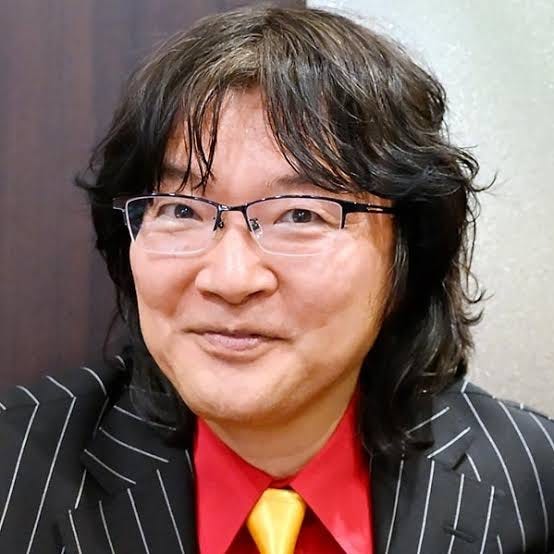
The Alchemist of Fukuoka
In the high-frequency, algorithmic coliseums of modern finance, where latency is measured in nanoseconds and value is often decoupled from tangible reality, the investment methodology of the individual known as “Mikimaru” appears to be a relic of a bygone era.
To the uninitiated institutional eye, Mikimaru, a pseudonym for a practicing physician based in the Fukuoka Prefecture, might be dismissed as a “Yutai” (shareholder perk) hunter. The Yutai system is a unique Japanese tradition where companies remunerate shareholders not just with cash, but with physical goods like premium food, restaurant vouchers, or prepaid cards. Wall Street often sneers at this as an inefficient use of capital.

Yet, to dismiss Mikimaru as a mere coupon collector is a profound analytical error. A deep-dive analysis of his decades-long track record, his widely read blog (”Mikimaru’s Shareholder Perk Investment”), and his published works reveals a sophisticated, ruthless, and psychologically fortified capital allocator.
He has constructed a proprietary valuation framework called “Comprehensive Combat Strength” (Sogo Sentoryoku).
This report deconstructs how a provincial doctor turned a disastrous early trading career into a fortune by realizing a fundamental truth. The greatest risk to an investor is not market volatility, but their own emotional fragility.
Part I: Origins of the “Yutai King”
The origin story of Mikimaru is indistinguishable from the tragic archetype of the Japanese retail investor in the early 2000s. Entering the market around 2001, Mikimaru had just finished his medical degree, and as a young physician with a high disposable he dove head first into investing. The Japanese market of this era was a desolate landscape. The bubble of 1989 had long burst, but the “Lost Decade” was metastasizing into a permanent state of deflationary stagnation.
Early records and retrospective writings from his blog indicate a chaotic initial phase. Like many people trading part-time, he was very susceptible to hyped up stocks. He treated the Japanese market like a casino which resulted in significant capital destruction. He describes this era as one of “tuition payments” to the market…
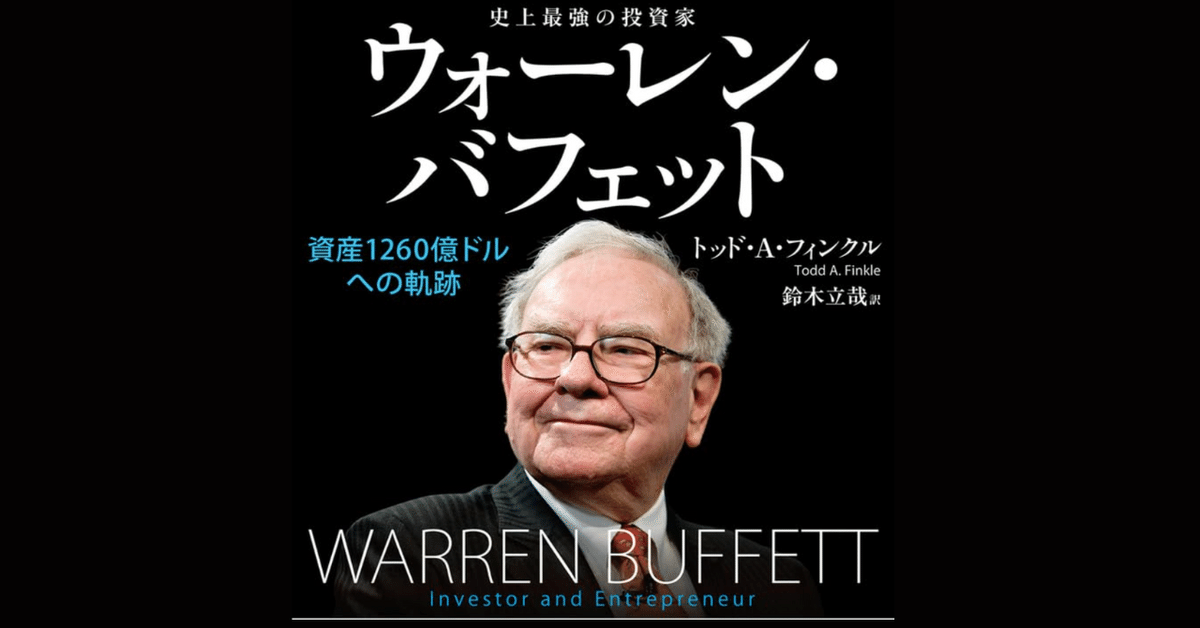
The turning point arrived in the mid-2000s, coinciding with a broader renaissance of value investing literature in Japan. Mikimaru encountered the works of Benjamin Graham and the early letters of Warren Buffett. The intellectual pivot was sharp. He abandoned speculation for the rigid discipline of “Net-Net” investing: Buying companies trading below their Net Current Asset Value (NCAV).
Mathematically, this was sound. The Japanese market in the mid-2000s was littered with companies trading at 0.5x or 0.3x book value, effectively worth more dead than alive. However, Mikimaru soon encountered the “Value Trap” paradox. A stock cheap enough to be a Net-Net is often a terrible business with declining revenues and indifferent management. Holding such stocks is a test of immense patience.
He realized that “Deep Value” was intellectually satisfying but emotionally corrosive. Watching a portfolio of stagnant, obscure machinery manufacturers while the rest of the world (and growth stocks) moved forward created a sense of futility. He needed a mechanism to bridge the gap between buying value and realizing value.
The Discovery of “Anesthesia”
It was here that Mikimaru synthesized his defining insight: The psychological utility of the Shareholder Perk. He observed a curious phenomenon in his portfolio. When he held stocks that sent him tangible goods, a box of seasonal vegetables, a voucher for a steak dinner, his tolerance for price volatility increased dramatically.
True to his medical background, he dubbed this the ‘Anesthesia’ of investing.
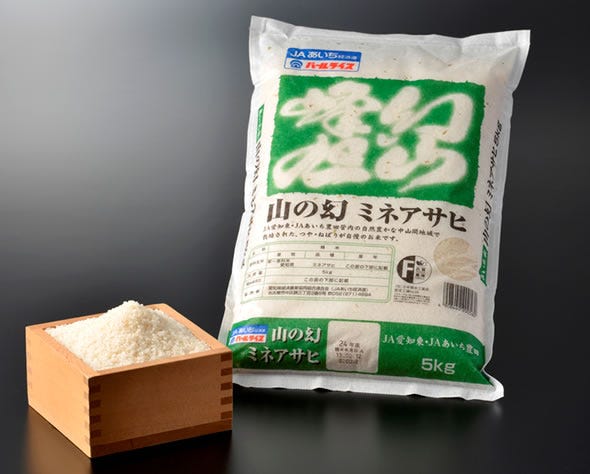
In traditional finance, a ¥5,000 dividend and ¥5,000 worth of rice are economically equivalent (ignoring taxes). To Mikimaru, they were distinct. The cash dividend is invisible; it disappears into a brokerage account, indistinguishable from capital. The rice is physical. It arrives at the door. It is consumed by the family. It creates a positive feedback loop unrelated to the stock ticker.
More importantly, the perk creates a “Yield Floor.” If a stock trading at ¥1,000 pays a ¥30 dividend and gives ¥20 in perks (5% total yield), and the price falls to ¥500, the yield on cost for a new buyer becomes 10%. This creates a natural support level where retail investors, attracted by the massive yield, step in to buy, preventing the freefall often seen in non-Yutai growth stocks.
By 2008, as the Global Financial Crisis decimated portfolios worldwide, Mikimaru had fully pivoted. He was no longer just a value investor; he was a “Yutai Value” investor. He aggressively deployed capital into the crash, targeting companies with strong balance sheets and generous perk programs.
While others panicked, he focused on the arrival of his shareholder gifts.
Part II: The Mikimaru Framework
Mikimaru’s methodology is codified in his “Comprehensive Combat Strength” (Sogo Sentoryoku) system. The terminology, borrowed from Dragon Ball’s power levels, presents a playful exterior that masks a rigorous, multi-factor valuation model
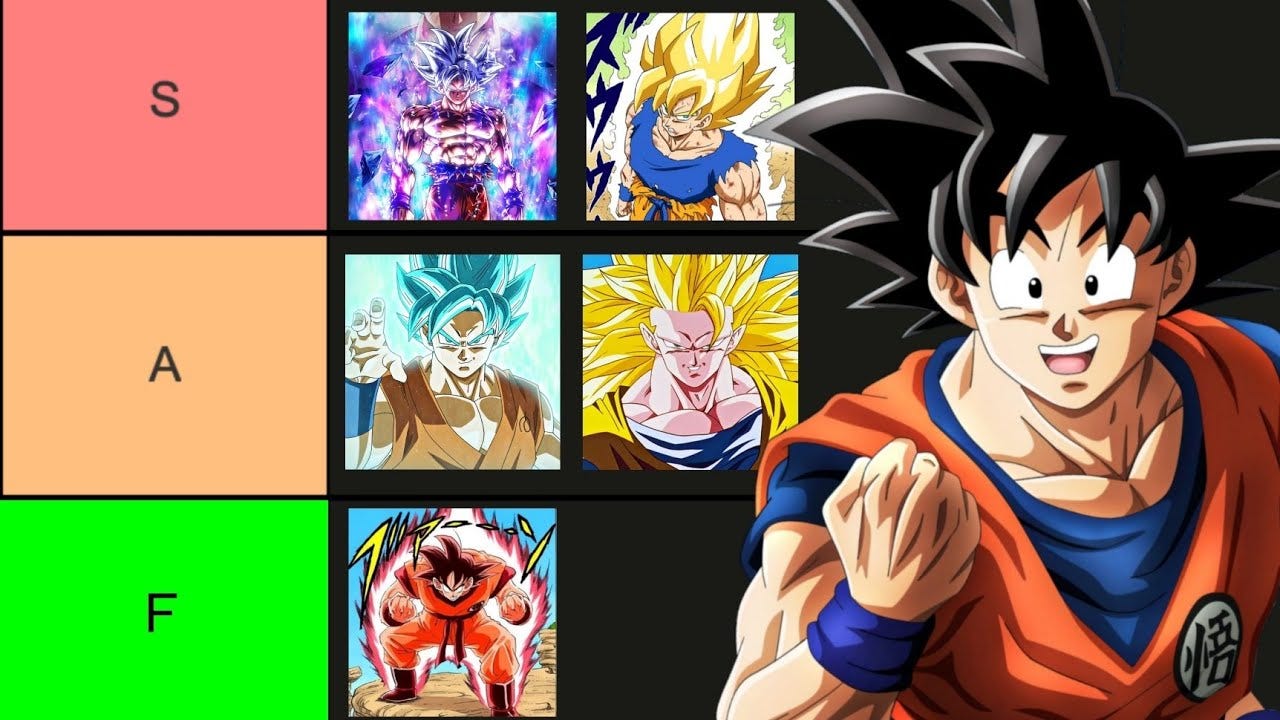
The central thesis is that a stock’s attractiveness cannot be reduced to a single metric like PER (Price-to-Earnings) or PBR (Price-to-Book). Instead, it is the sum of its valuation, its growth potential, and crucially its Total Yield.
The formula for Total Yield in the Mikimaruverse is explicit:
This inclusion of the “Monetary Equivalent of Perks” is the secret sauce. Institutional analysts value perks at zero. Mikimaru values them at market replacement cost.
If a company gives a voucher for a ¥4,000 meal, that is ¥4,000 of post-tax disposable income saved. For a high-earning doctor in a top tax bracket, earning ¥4,000 net might require earning ¥8,000 gross. Therefore, the “Invisible Dividend” of the perk is mathematically far more valuable than the cash dividend.
The Ranking Hierarchy
To manage the cognitive load of tracking hundreds of positions, Mikimaru assigns a “Combat Rank” to every stock. This ranking determines portfolio allocation.
🏆 Rank SS: The Holy Grail
Valuation: PER < 10x | PBR < 0.6x Yield: Total Yield > 5.0% Quality: Strong balance sheet (Net Cash). Identifiable catalyst for growth or re-rating.
ACTION: Maximum Aggression. Top 5–10 holding. Buy until it hurts.
💎 Rank S: Elite Class
Valuation: PER < 12x | PBR < 0.8x Yield: Total Yield > 4.5% Quality: Stable moat. Durable competitive advantage. “Sleep well” stock.
ACTION: Heavy Allocation. Core portfolio pillar.
✅ Rank A: Standard / Good
Valuation: Fair Valuation Yield: Total Yield > 4.0% Quality: Solid business. Attractive perks that are personally useful.
ACTION: Standard Unit. (e.g., 100–500 shares). Hold for perks.
👁️ Rank B: Watchlist
Valuation: Average Yield: Average Quality: No significant catalyst.
ACTION: Monitor. Hold minimum unit or sell.
⛔ Rank C: Avoid
Valuation: Overvalued Yield: Low Yield Quality: Dilutive management. Declining moat.
ACTION: Liquidate.
The “Jungle” Strategy
To navigate the Japanese market, Mikimaru employs a “Jungle” strategy, holding hundreds of names (400–600). This extreme diversification is a structural necessity dictated by the regressive nature of Yutai yields.
Unlike standard dividends, which are linear (owning 10x shares pays 10x dividends), Yutai perks effectively punish concentration. A minimum unit of 100 shares might yield a ¥2,000 gift card (a 2% yield) but increasing that position to 1,000 shares often yields only a marginal increase, perhaps to ¥3,000 (a 0.3% yield). This math forces the investor to “farm” the minimum unit across a vast number of companies rather than concentrating capital.
Within this broad “Jungle” portfolio, equities are assigned one of two distinct roles:
The Gladiator: Deep-value “shield bearers” (often PBR around 0.3x) like construction firms or regional banks. They provide the defensive line through asset value and steady dividend floors.
The Alice: Growth stocks disguised as value. These are potential “ten-baggers” entering new markets or expanding margins.
The ultimate goal is to identify Gladiators mutating into Alices: cheap, safe stocks that suddenly find a growth engine. When a stock offers the downside protection of a Gladiator with the explosive upside of an Alice, it achieves the coveted “SS” rank.
