


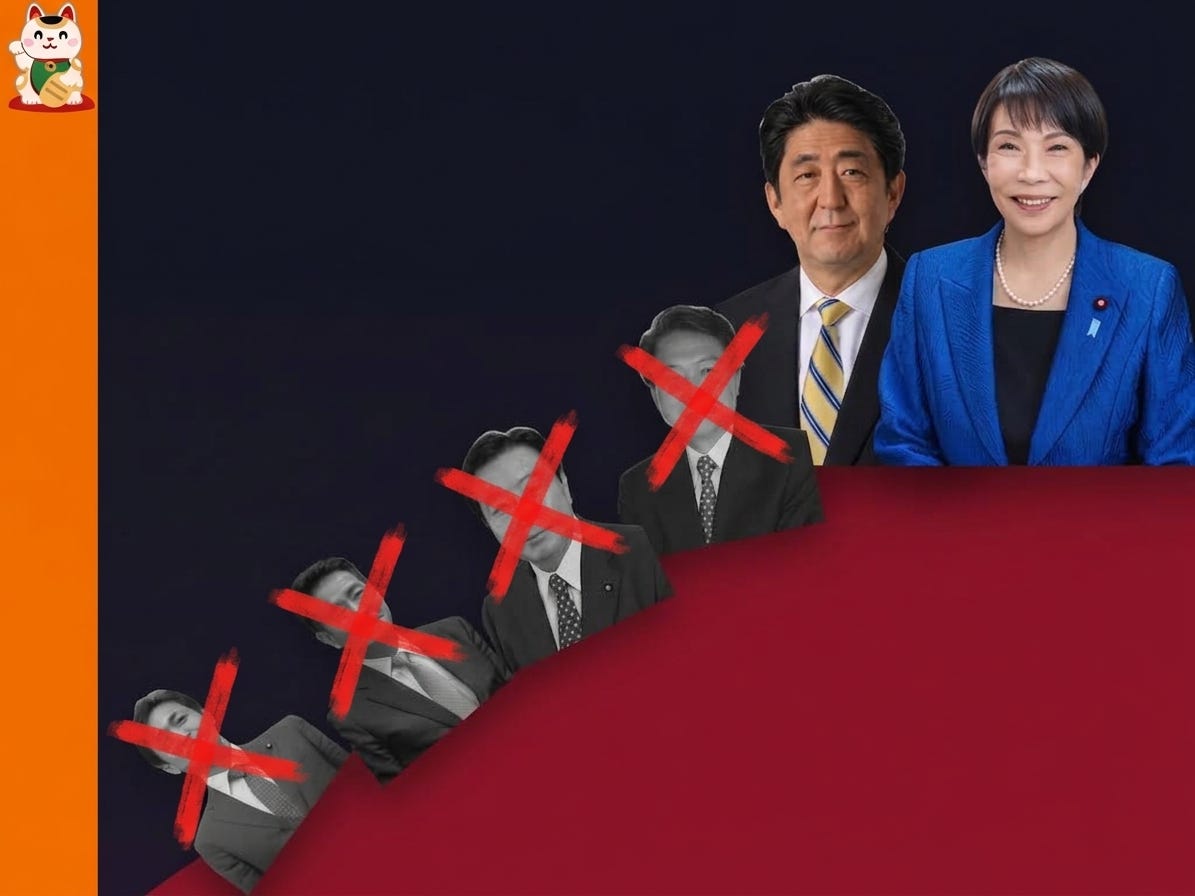
On February 8 this year, Japan’s Liberal Democratic Party (LDP) secured the largest victory in postwar history, capturing a two-thirds supermajority. The victory was so overwhelming that the party ran out of candidates, abandoning 14 seats to the opposition.
What’s even wilder is that just 18 months before, a massive slush-fund corruption scandal had forced two consecutive LDP prime ministers to resign. And in the last election, the party lost its grip on both houses of parliament. In simple terms, the LDP was more hated than any other time in modern history.
Turning a catastrophic political collapse into the biggest victory in postwar history wasn’t because the LDP did some crazy 4D chess moves. It happened because the opposition is so hopelessly incompetent that Japan remains, in all but name, a one-party state…
In fact, since it was formed in 1955, the LDP has spent less than five years out of power.
Parties in countries like China has held uninterrupted power using censorship, prisons, and outlawing rivals. Japan has achieved the same political monopoly under democratic freedom, with a free press, publicly funded opponents, and clean elections.
How are they doing it?
1955: How A Democracy Became a One-Party State
How does an open democracy where anyone can run for office become a permanent one-party state?
To answer that, I picked up constitutional historian Mitsuru Kurayama’s “A Historical Examination: Why Japan’s Opposition Is Hopeless”, which is where much of the facts in this article comes from.
His argument starts from a definition:
“By definition, a political party exists to seize power. […] Yet Japan’s opposition lacks even the appetite to lead, remaining perpetually inept across its entire history.”
However, this wasn’t always the case.
Back in 1955, the main opposition, the Japan Socialist Party (JSP) was guaranteed to win. Riding on an anti-war and anti-poverty platform, they scared the US and Japanese business elites so badly that Japan’s conservative parties, despite having almost nothing in common, merged to create the LDP, which overnight became Japan’s biggest party. The US even pumped covert money into conservative pockets to sustain this unnatural alliance (The New York Times, 1994).
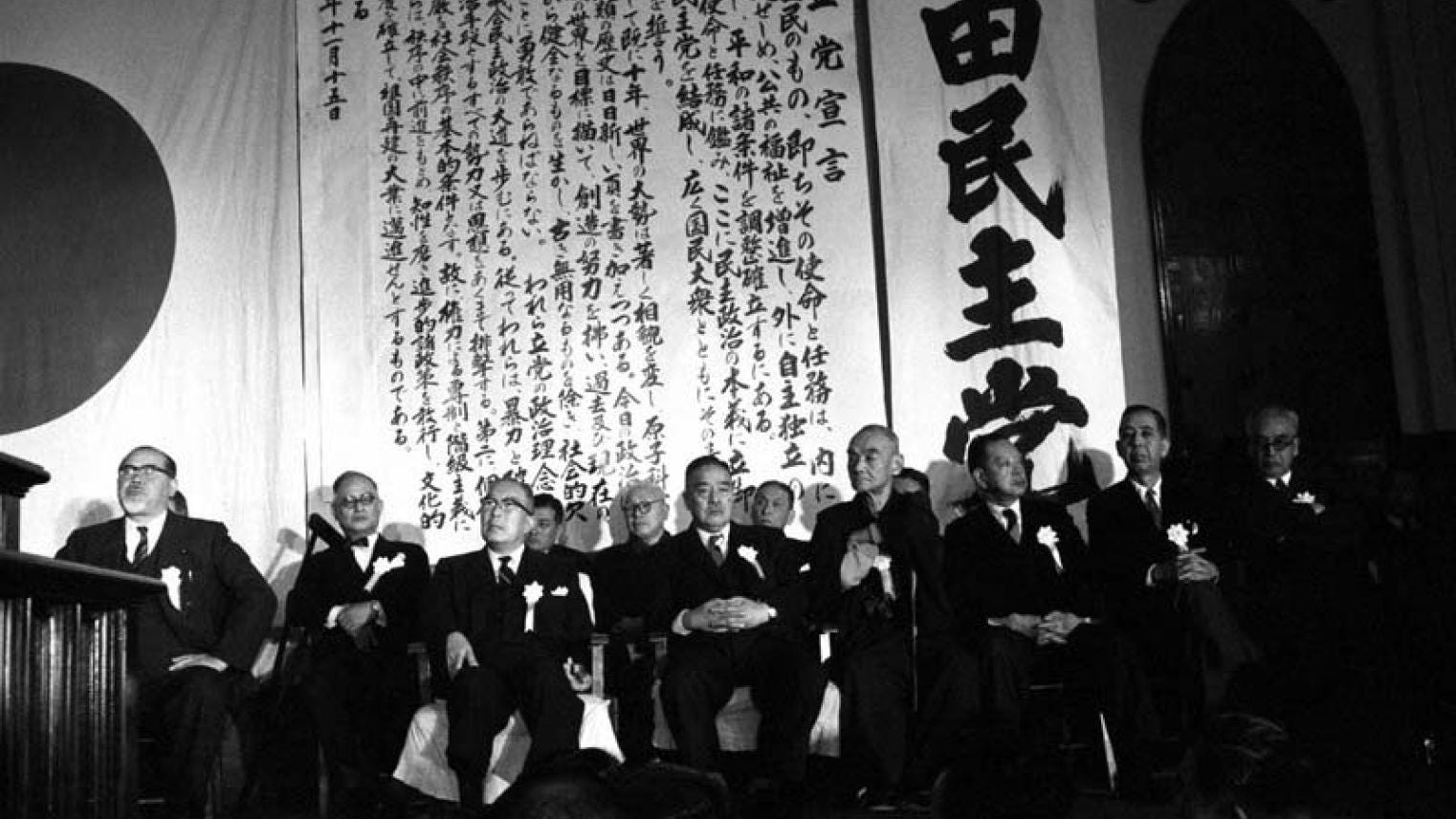
From then on, instead of fighting to retake power, JSP’s goal turned into a fake war to protect Japan’s anti-war constitution. Changing the constitution takes a two-thirds majority, which meant the socialists only needed 34% of parliament to block the LDP.
This was the ultimate cushy gig. JSP could play the heroic defenders of peace forever, receive guaranteed government payouts, without ever taking on the responsibility of ruling.
The JSP spent the next 34 years aiming at 34%…
1989: The Day the Opposition Woke Up
On July 23, 1989, the Japanese left woke up.
Takako Doi’s JSP faced a severely mismanaged LDP, with top members newly being bribed with pre-IPO Recruit shares (now owner of Indeed and Glassdoor). To make matters worse, the LDP was in the midst of forcing through Japan's first, wildly unpopular 3% sales tax.
Voters revolted, and the LDP got its worst result ever.
The JSP was still far from a governing majority, but Doi had managed to convince voters that they were a real alternative. She cemented her victory with three words every Japanese person over fifty can still quote: “The mountain moved” (山が動いた).
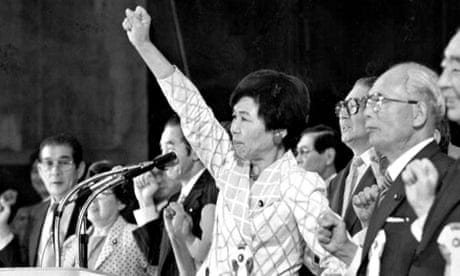
The mountain had indeed moved, but the ground beneath them was about to collapse…
Within months of her victory, the biggest bubble in Japanese history burst, starting the “lost decades”. This economic collapse broke the LDP’s 38-year monopoly on power and Doi became Speaker of the House in 1993.
However, the new coalition was so crippled by infighting that in just one year, her party cut a desperate deal with the LDP where Tomiichi Murayama was installed as prime minister. As soon as Murayama came to power, he abandoned every position the JSP had fought for: He formally recognized the Japanese military structure that his supporters considered illegal and backed the US-Japan security pact they had protested for generations.
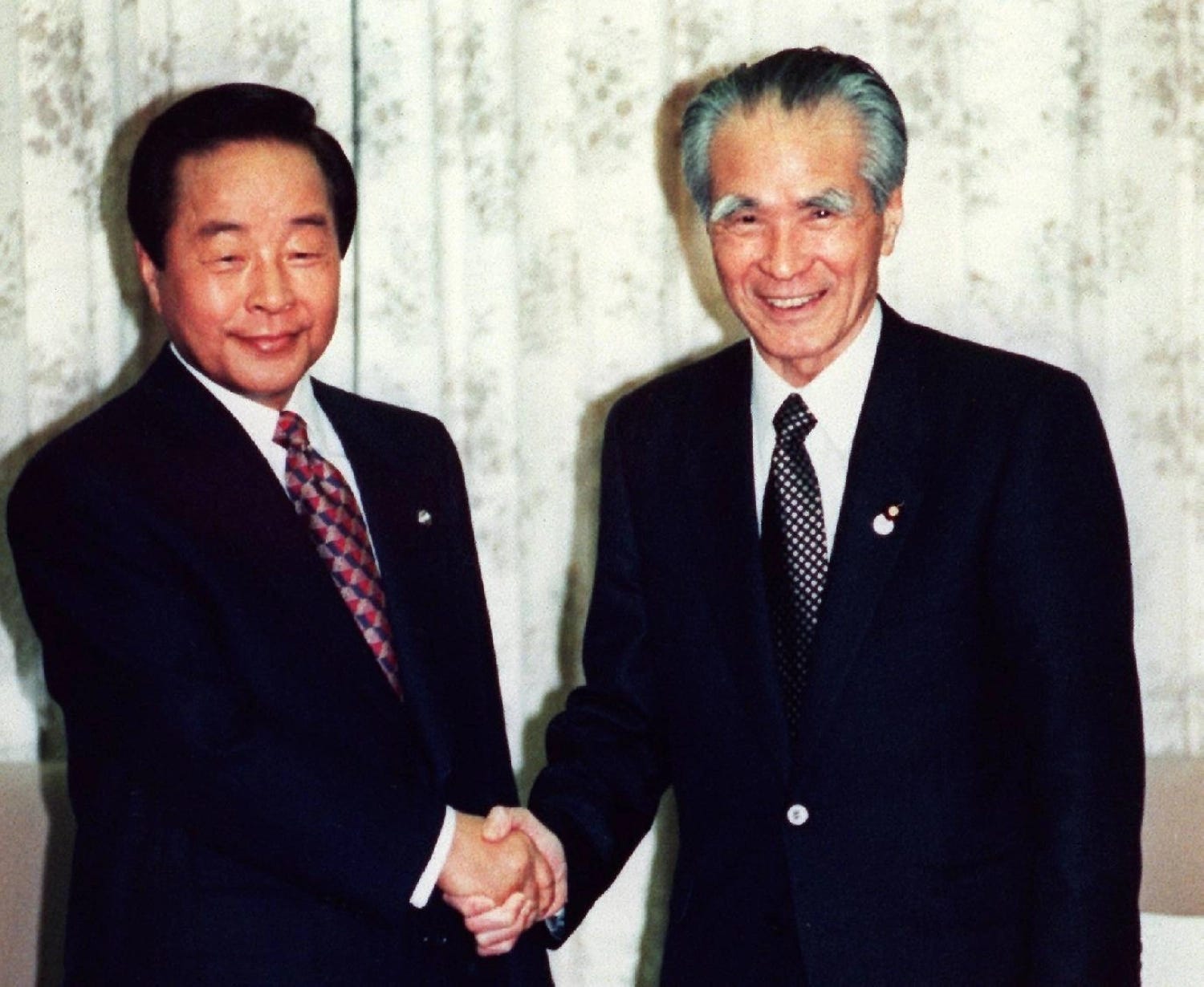
Now effectively a diluted copy of the LDP, the JSP collapsed in slow motion. By June 1994, the LDP had taken back power, just 11 months after the JSP had won, and in 2003, Takako Doi even lost her own district.
2009: The Opposition Strikes Back
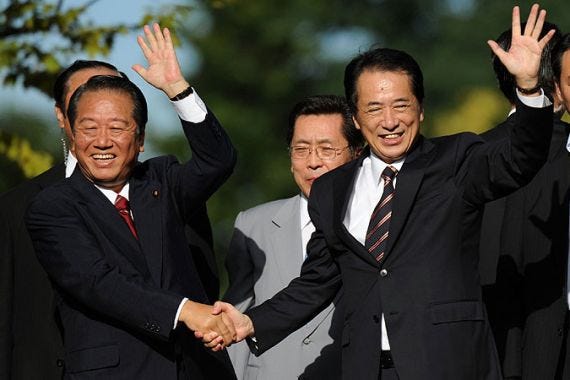
At this point, the old socialist JSP was basically dead. However, something far more dangerous rose out of the ashes: The Democratic Party of Japan (DPJ). This was a coalition mixing former socialists with moderate reformers. Most importantly, they brought in Ichirō Ozawa, a ruthless former LDP kingmaker who knew every dirty trick in the ruling party’s playbook.
They quickly managed to gain momentum by attacking LDP over stagnant wages, rising inequality, and the 2007 scandal where the government had lost 50 million pension records. Meanwhile, Ozawa built up ground operations to fight the LDP in rural areas, transforming the DPJ from a protest party into a genuine government-in-waiting.
However, in May 2009, just three months before the election, Ozawa was forced to resign over a 36-million-yen fundraising scandal. Party co-founder Yukio Hatoyama won the emergency vote to replace him and miraculously managed to recover the party’s momentum by pinching himself as an uncorrupted fresh start. In the August election, the DPJ took 308 of 480 seats, and became the first opposition party in Japan’s democratic history to win an outright majority.
I remember seeing the victory on TV as a sign that Japan had changed; that we could finally throw the corrupt politicians out and get something better.
I should have known better…
