


Disclaimer: This report is for informational purposes only and does not constitute financial advice. Shareholder benefit programs are subject to change or abolition at the discretion of the company. Always verify the latest IR releases before investing.

Ho, ho, ho! It is that time of year again.
Welcome to the definitive 2025 edition of my 株主優待 (Kabunushi Yuutai - Shareholder Perks) Hunter’s Guide.
Check out the 2023 list here:

I am talking about companies that literally send you Christmas presents: Boxes of premium beer, vouchers for endless family dinners, high-end cosmetics, and even hefty gift cards.
Sadly for gift lovers, the Tokyo Stock Exchange is undergoing a seismic shift. The days of simply buying a stock one day before the ex-dividend date and receiving a sack of rice in the mail are fading. In their place, a new era of “Capital Efficiency,” “Continuous Holding Requirements,” and “Digital Transformation” has emerged.
But fear not!
Just because the rules are changing doesn’t mean the gifts have stopped coming. In fact, for the savvy investor who knows where to look, and more importantly, when to buy, December 2025 offers some of the most lucrative and tangible rewards in recent memory.
In this much more exhaustive report than in previous years, I will take you through the structural changes rocking the Yuutai (shareholder perks) world, and deliver my “Nice” list:
The Top 10 Shareholder Benefit Stocks for December 2025.
Grab your hot cocoa (or a Kirin beer, if you played your cards right last year), and let’s dive in.
Why Shareholder Benefits are Under Attack
Historically, Kabunushi Yuutai was uniquely Japanese, a cultural contract where companies provided tangible goods (products, vouchers, Quo cards) to stabilize their shareholder base. Retail investors loved it because it provided a “psychological floor” to the stock price; even if the stock tanked, you still got your 3,000 yen restaurant voucher.
In Japan, You Receive Gifts for Owning Stocks

As you might have heard, Japan has a very strong gift-giving culture. In fact, it is customary to bring a gift even when you’re just visiting someone’s home.
However, foreign institutional investors, the Grinches of this narrative,, have long hated the system. They argue that shipping bags of rice to 50,000 grandmothers in Osaka is an inefficient use of capital that could be better spent on dividends or share buybacks. Furthermore, international investors generally cannot receive these physical goods, effectively creating a two-tiered class of ownership.

In 2025, with the TSE aggressively pushing for higher Price-to-Book (P/B) ratios and capital efficiency, many large-cap, globally-minded companies have capitulated to institutional pressure. We have seen giants like Orix (8591), once the undisputed king of Yuutai, finally terminate its program to focus on pure dividends. Similarly, Asahi Group Holdings (2502) has moved to abolish its benefits to streamline global returns.
For the companies that have kept their programs, the strategy has shifted from “Attraction” to “Retention.” The biggest trend for December 2025 is the proliferation of Continuous Holding Requirements.
In the past, savvy traders practiced “Cross-Trading” (Tsunagi-uri): Buying the stock and short-selling it simultaneously just for the record date to snag the gift without taking price risk. Companies hated this. It created volatility and administrative costs without building a loyal investor base.
Now, the walls are going up. To get your gift in December 2025, many companies now require you to have held the stock for at least six months or even a year. This means you needed to be on the register by June 2025 or even December 2024.
The Trap: Many novice investors will buy Lion Corp (4912) or Kirin (2503) in November 2025, expecting a gift, only to receive... absolutely nothing.
The Opportunity: This creates a moat around these stocks. Once you are in the “club” (meeting the tenure requirement), the yields are often protected from the volatility of short-term traders.
Top 10 Yuutai Stocks for 2026
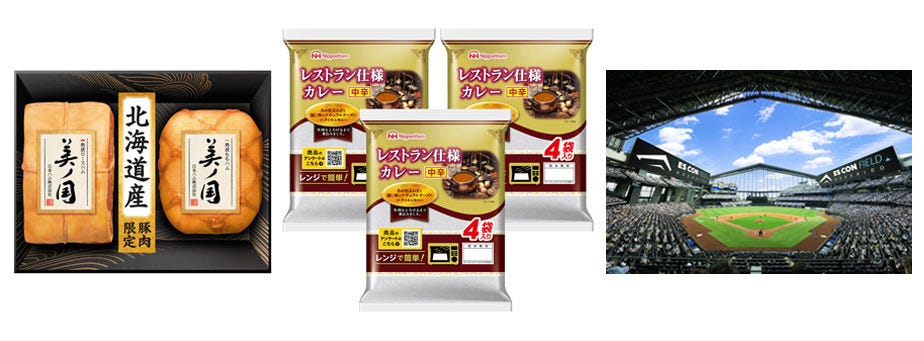
Here it is. The crème de la crème!
These are companies that have not only maintained their generous programs but, in many cases, strengthened them.
I have selected these based on:
Yield (Total Shareholder Return)
Safety (Risk of Abolition)
Strategic Value (Business Fundamentals).
