


Every rich country on Earth has fallen into the same trap: The moment a nation gets rich, educated, and urban, its birth rate falls off a cliff.
From Japan and South Korea to Italy, Germany, and the United States, fertility has sunk well below the level needed to replace the last generation. Over the next few decades, most cities across the rich world are going to lose a third, or even half, of their people!
And so far, nobody on Earth has figured out how to reverse it. South Korea burned $270 billion on baby bonuses (that’s almost $40,000 per baby mind you) and watched its birth rate hit a world record low anyway.
And this is definitely not an exclusively Asian issue. Hungary threw 5% of its economy at family tax breaks and births still keep dropping.
Cash handouts, state matchmaking apps, and Elon Musk tweeting about population collapse twelve times before breakfast hasn’t reversed this trend one bit!
That leaves a boring truth: Nobody has found a silver bullet to reverse a falling fertility rate, and without one, countries won’t collapse overnight from some election-year scare politicians warn us about. They will just slowly rot from the ground up, one town, one bus line, and one burst water pipe at a time, while cowardly leaders keep promising the old world is just one vote away from coming back.
Ikeshima: Welcome to the demographic endgame
Growing up in Kumamoto on Japan’s southern island of Kyushu, I only had to travel two hours west into Nagasaki Prefecture to see that endgame with my own eyes.
Hop on a ferry thirty minutes out of port from Nagasaki city and you land on Ikeshima, a one-square-kilometer island that looks like a time machine into what awaits every shrinking town…
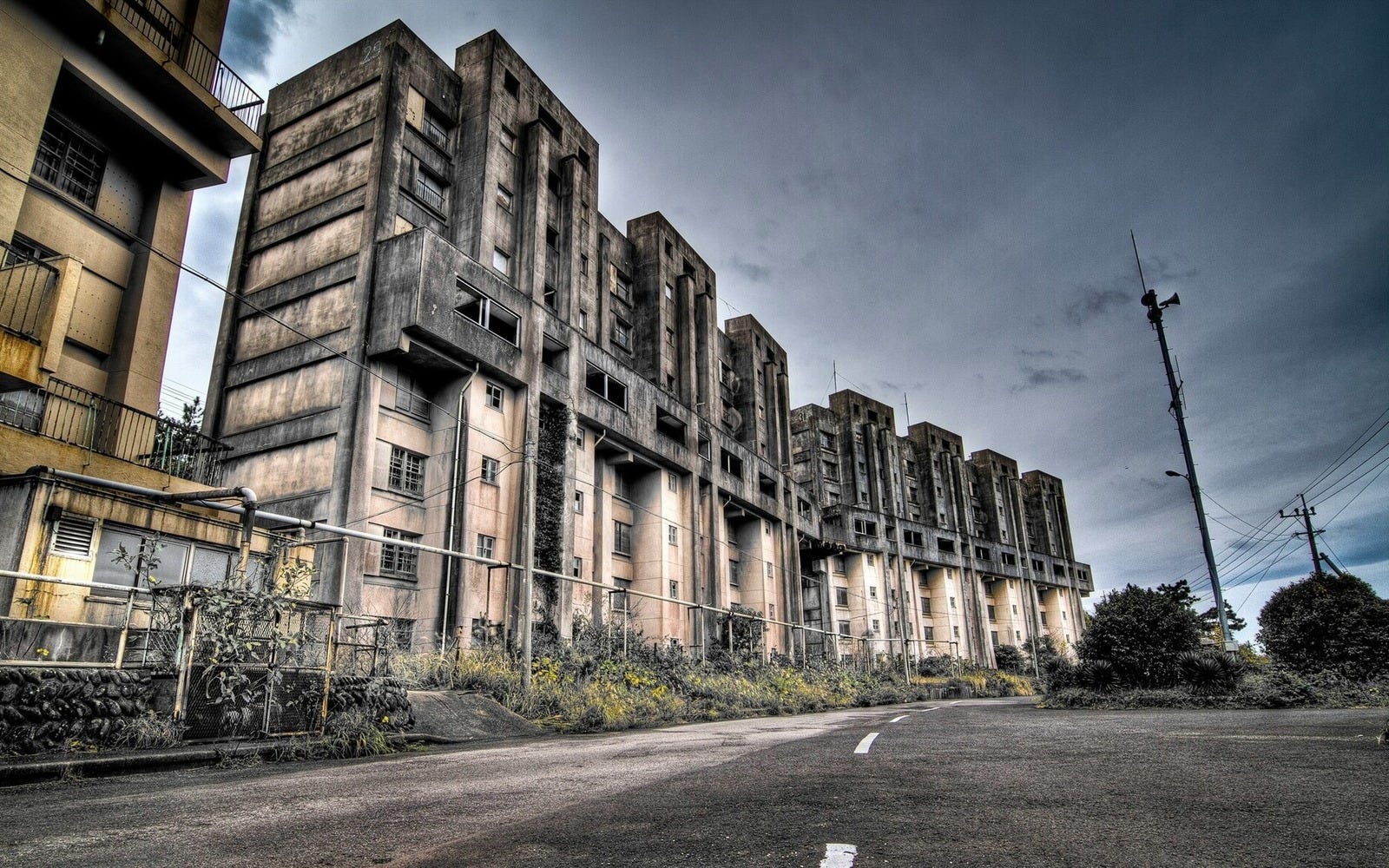
In 1970, when coal was king, Ikeshima was booming. Around 8,000 miners and their families packed this tiny rock, living inside eight-story concrete apartment towers stacked up the hills like a Manhattan in the East China Sea.
Then the coal ran out. In 2001, the mine locked its gates for good.
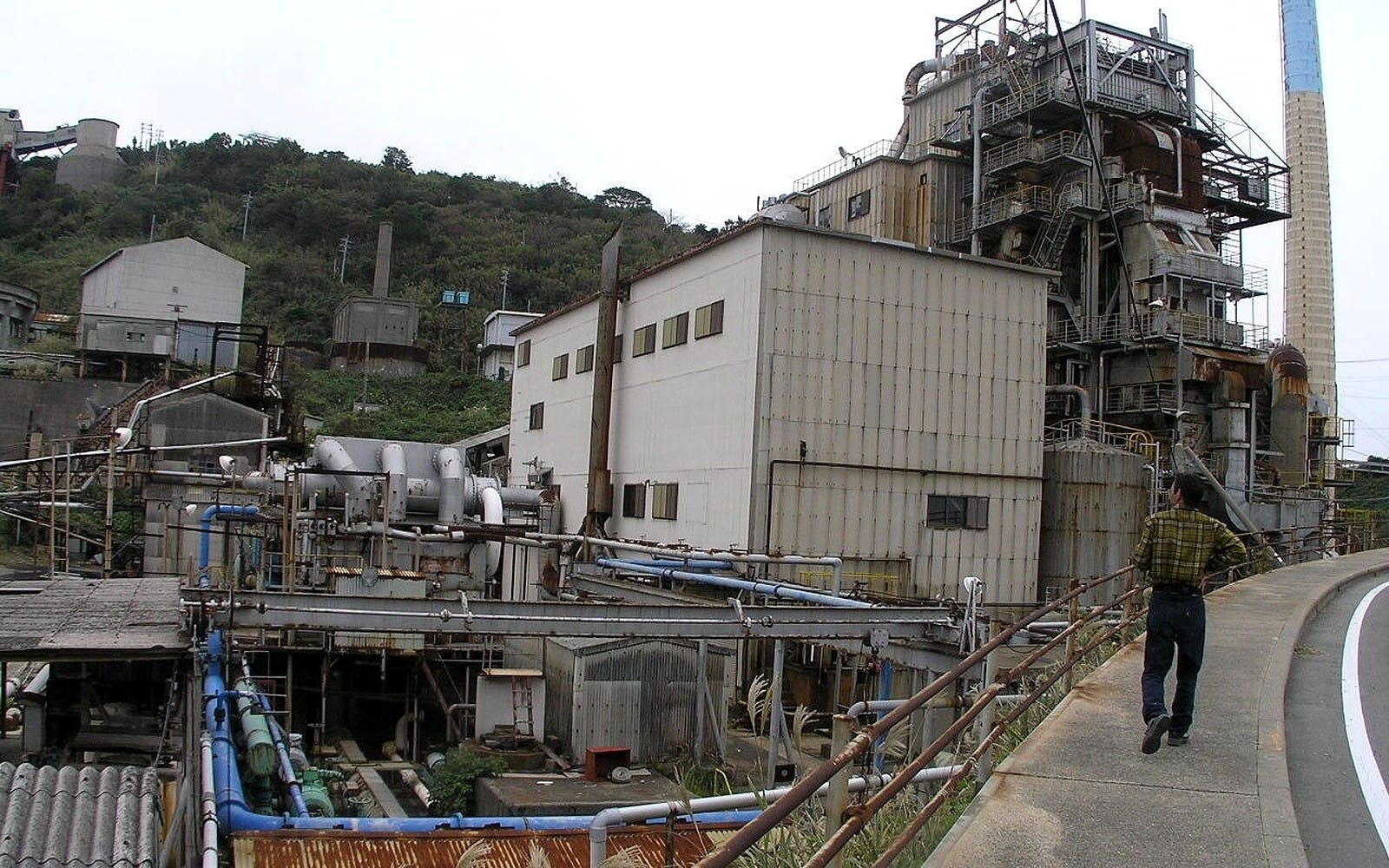
Ikeshima didn’t vanish overnight, it died in agonizing slow motion. First the island’s crematorium shut down. Then the police office. Then the gas station.
Today, just 93 mostly elderly residents remain on Ikeshima, surrounded by an entire city of empty eight-story towers where vines crawl through shattered windows.
Because 93 citizens still call the island home, Nagasaki City can’t pull the plug. City hall still bleeds money keeping the ferry, water pipes, and roads running for an island built for 8,000.
Detroit: The same nightmare on a massive scale
Now blow Ikeshima up to an entire American metropolis, and you get Detroit.
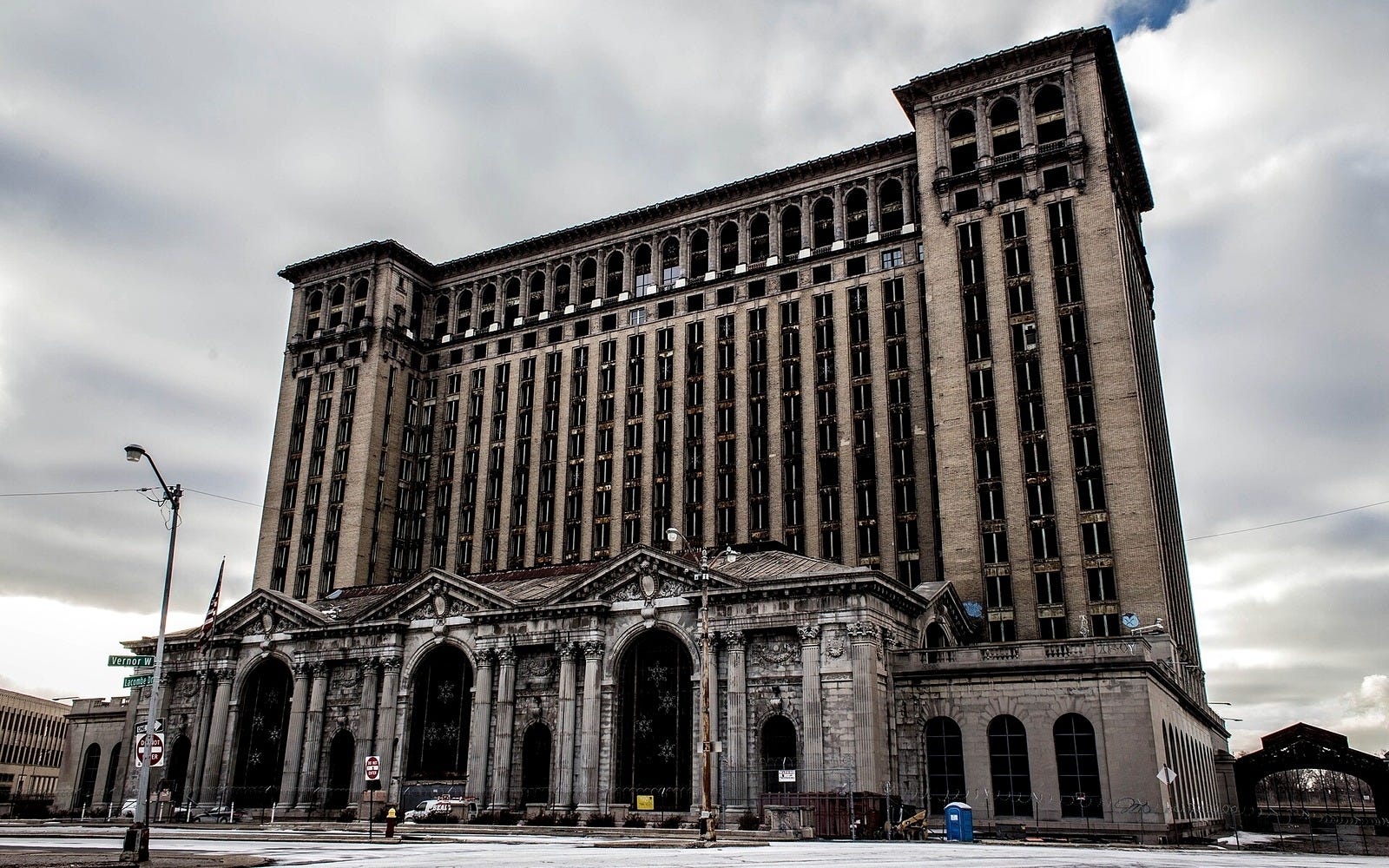
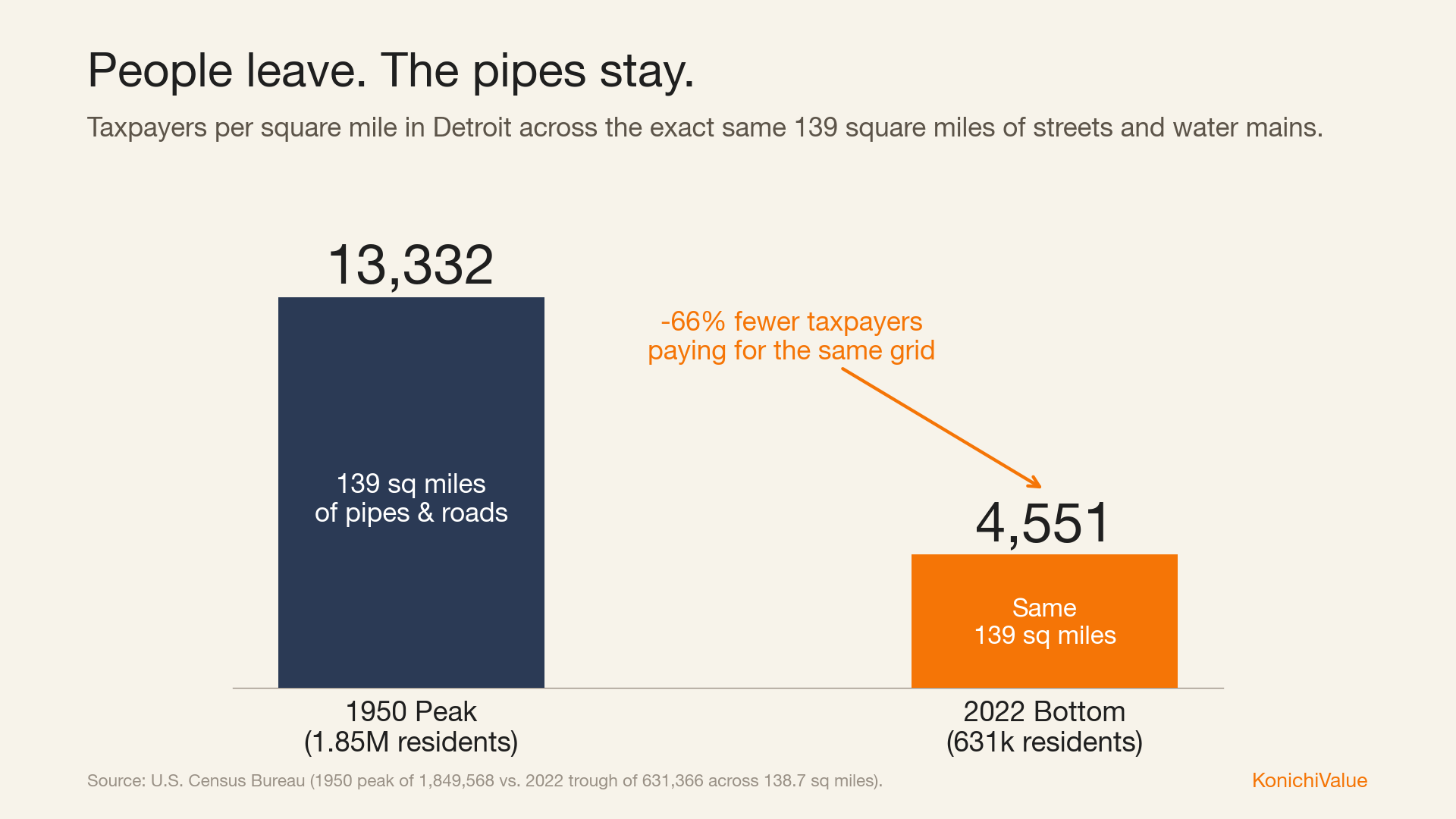
At its postwar peak, 1.85 million residents split the bill for 139 square miles (around 360 km² for you Europeans out there) of pipes, roads, and streetlights. That’s more than three times the size of Paris!
You’ve probably heard the story of what happened next… Over the next few decades, auto plants that was the reason the city became so rich closed down. By 2022, two-thirds of those people were gone, yet every single mile of pipes and asphalt stayed behind, forcing each remaining household to shoulder roughly triple the infrastructure bill just to keep basic services working.
By 2013, almost half of all Detroit’s streetlights were busted, and calling the police meant waiting more than an hour. The same year, the city had to file the largest municipal bankruptcy in American history.
Faced with this death spiral, politicians did what cowards in office always do: They lied.
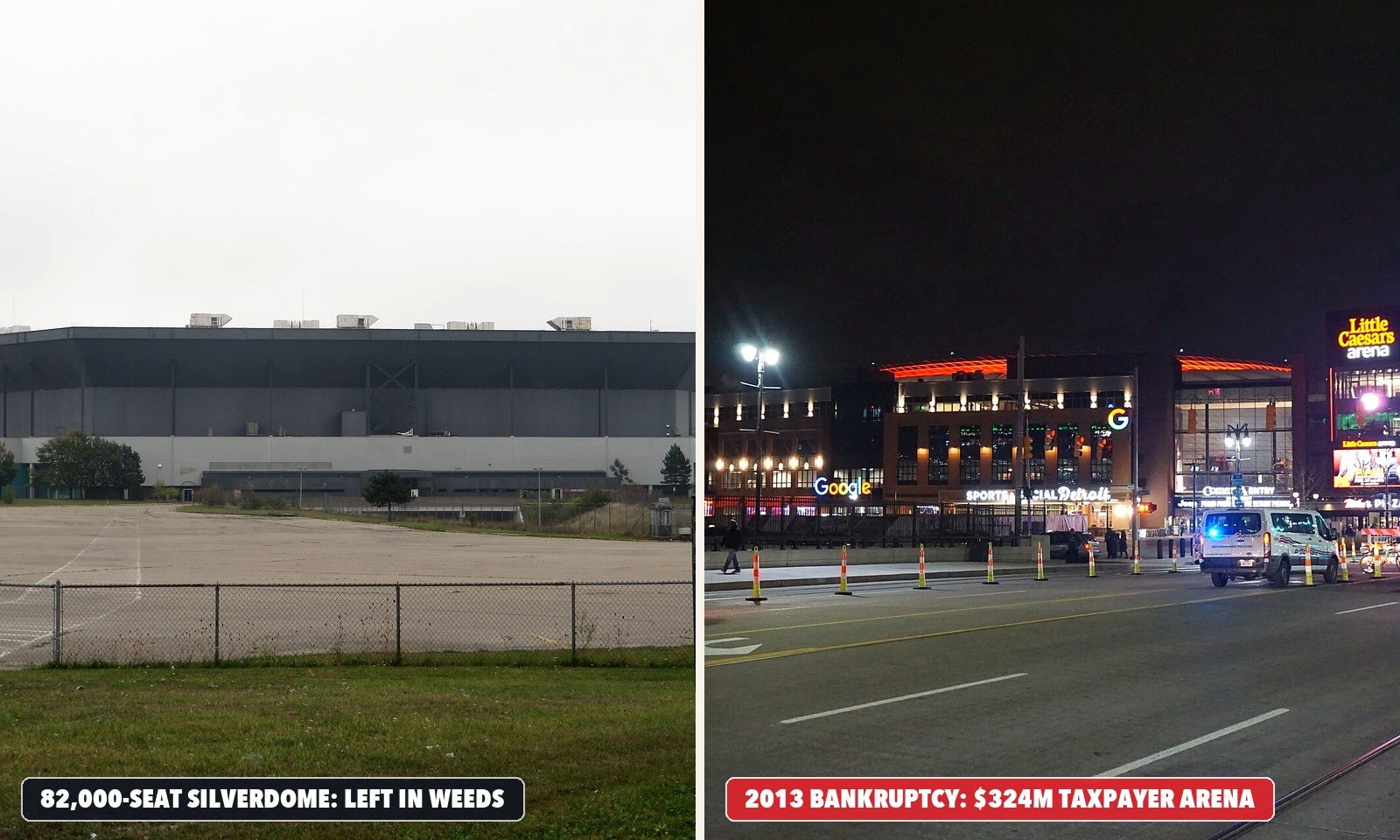
Earlier leaders bulldozed an entire neighborhood of 1,500 homes for a GM factory that delivered barely half the promised jobs. And the exact week Detroit went bankrupt, officials approved $324 million in public tax money for a shiny new downtown stadium. Even crazier, Metro Detroit’s old 82,000-seat NFL stadium already sat roofless right up the highway!
How can this actually be fixed?
It’s easy to see why politicians panic when populations shrink. Nobody wins an election by walking into a dying suburb and telling homeowners the city can no longer afford their streetlights, their roads, or the pipes beneath their street. So leaders take the easy way out: They rack up debt, cut ribbons on shiny new stadiums, and pray for a baby boom until the town goes bankrupt.
Almost every politician plays that cowardly game, except one stubborn mayor on Japan’s snowy west coast named Masashi Mori.

When Mori took office in little known town of Toyama in 2002, it was racing toward the exact same cliff as Ikeshima and Detroit. Four hundred thousand people had sprawled across twice the land area of Seoul (a city of nearly 10 million mind you!) Downtown was hollowed out, snowplow bills were crushing the municipal budget, and elderly residents who could no longer drive were stranded hours from the nearest grocery store or hospital.
Mori refused to sell voters a fairy tale. He walked into 108 town hall meetings over three years and told angry suburban residents that “if Toyama keeps plowing and piping every street, the city will die!”
As a fix, he had an incredibly simple pitch he called dumplings on a skewer. Fast public transit is the skewer, and walkable neighborhoods clustered around the stops are the dumplings.
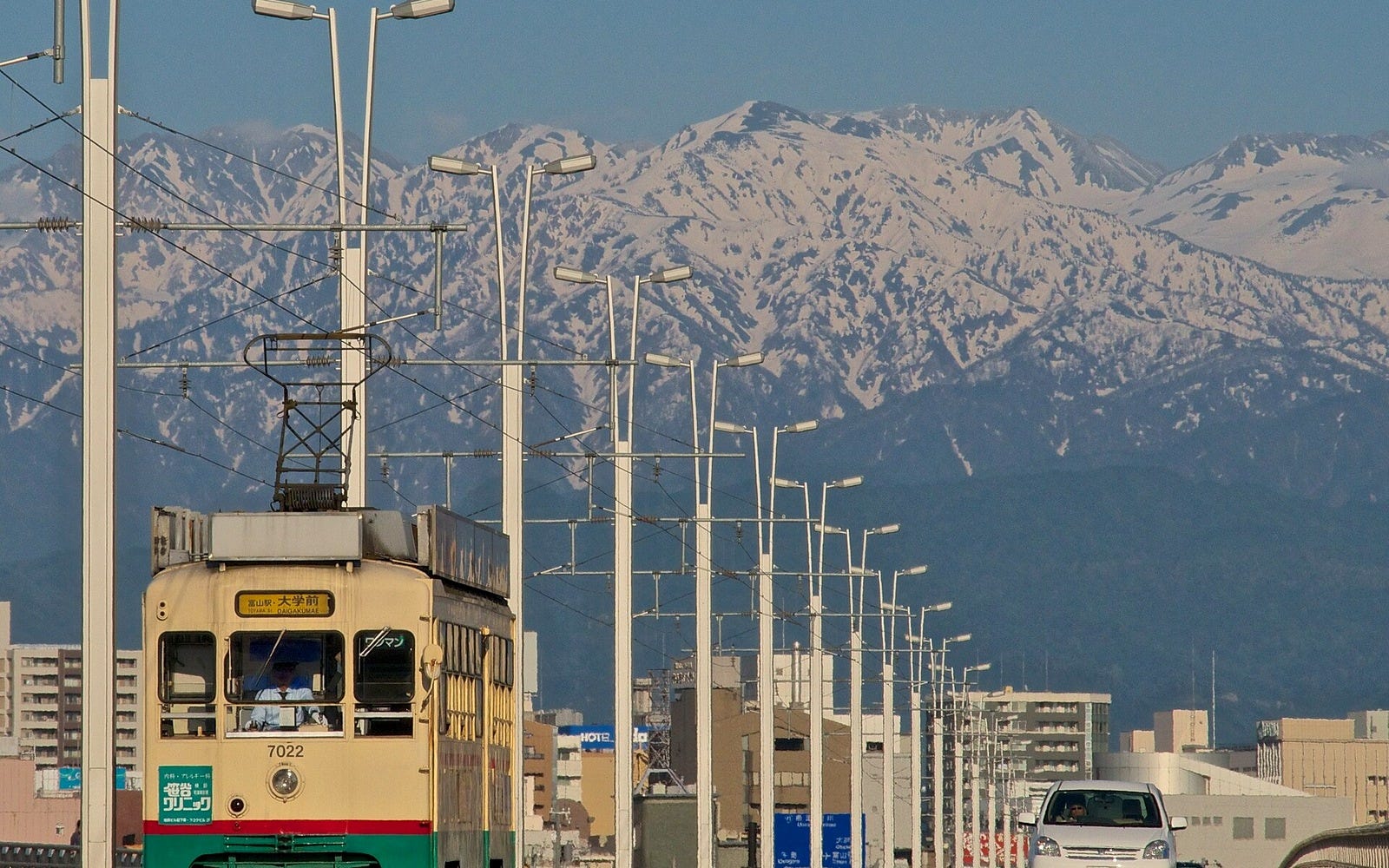
Toyama ripped up a dying rail line where trains came once an hour and rebuilt it into sleek European-style light rail that rolls straight underneath the bullet-train platforms. Seniors ride downtown all day for a single ¥100 coin ($0.65).
Then Mori made his most controversial move: His office started paying Toyama’s citizens up to ¥500,000 ($3,300) in cash to leave outer suburbs and buy or rent homes inside walkable transit zones.
Why bribe someone to move ten minutes down the road? Because handing a family $3,300 once is pocket change compared to fixing their water mains and plowing two meters of snow out to an empty street for the next forty years!
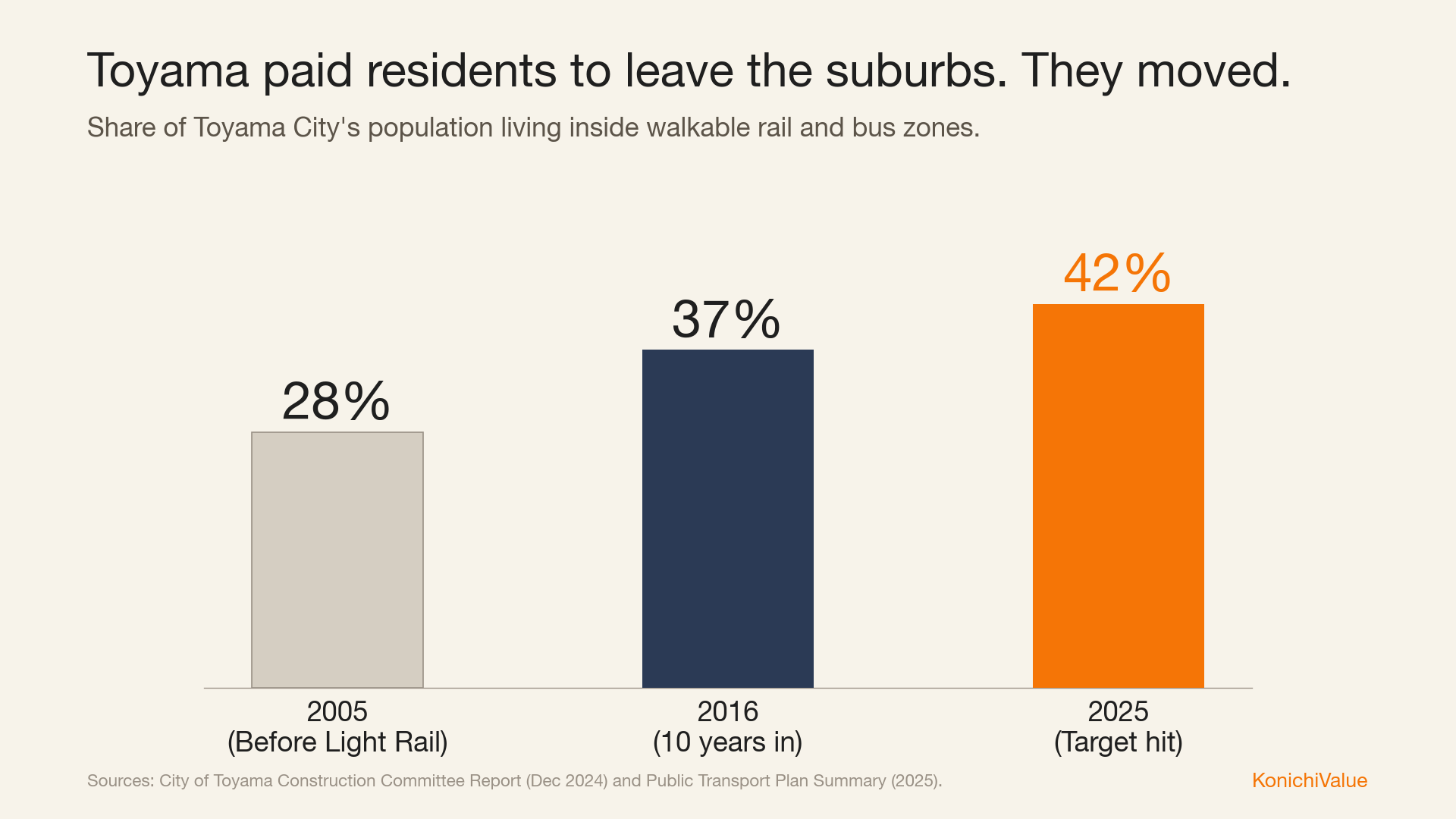
Safe to say, Mayor Mori’s bet paid off handsomely. Today, 42% of Toyama lives inside walkable transit zones, up from 28% before Light Rail. Senior tram ridership jumped 3.5x, and downtown land values climbed past decaying regional rivals. Better yet, nearly 90% of newcomers moving into those transit zones are under 50.
Over 700 Japanese cities have copied Toyama’s “compact city” paperwork since, and almost all of them are flopping. It’s easy for mayors to draw pretty zoning maps in city hall, but having the spine to block new suburban sprawl or actually pay people to move inward have proven too hard for most of them; and so their plans fail…
What happened to Detroit?
Maybe you’re thinking: Sure Rei, that works in polite Japan. Try telling Western voters you’re tearing down their block.
Funny enough, look at what happened in Detroit the moment it elected a mayor who dropped the 1950s nostalgia!
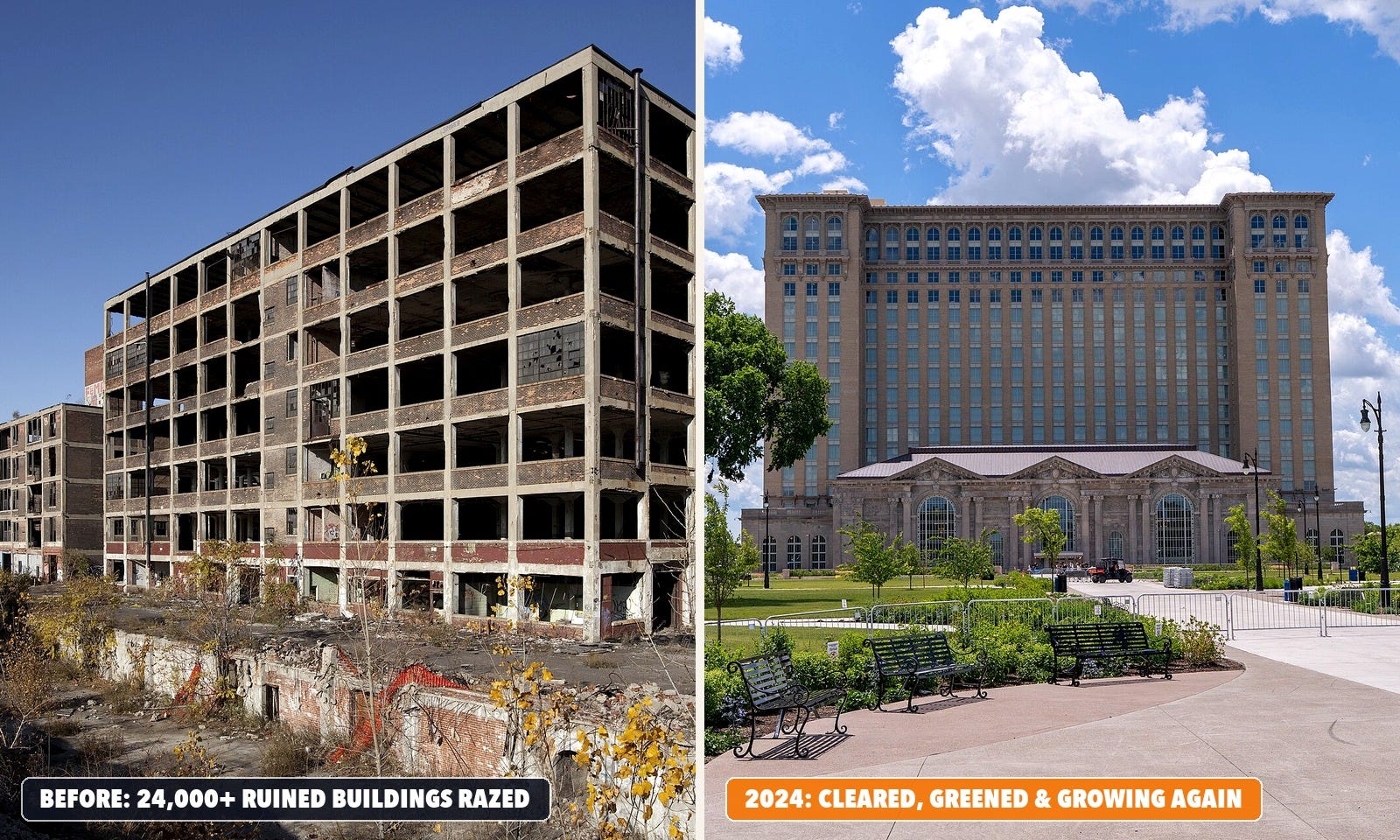
Taking office right after bankruptcy in 2014, mayor Mike Duggan stopped promising the old auto factories were coming back and brought out the chainsaws. Detroit bulldozed over 24,000 ruined structures, fixed up 10,000 salvageable homes, and launched a clever land swap called Solar Neighborhoods.
Instead of spending millions mowing weeds on dead streets forever, Detroit invited blighted blocks to volunteer to become solar farms, and over 40 neighborhoods raised their hands. Holdout homeowners got double market value in cash ($90,000 minimum) to move onto intact streets nearby. Across 165 cleared acres, solar panels now generate clean electricity for all 127 municipal buildings. After bleeding residents for six straight decades, Detroit’s population has now grown three years in a row for the first time since 1957!
Too broke for buyouts?
All these schemes have relied on money, but they don’t have to!
Cross the Atlantic to Leipzig in former East Germany and you see an even scrappier playbook for a city with zero cash.
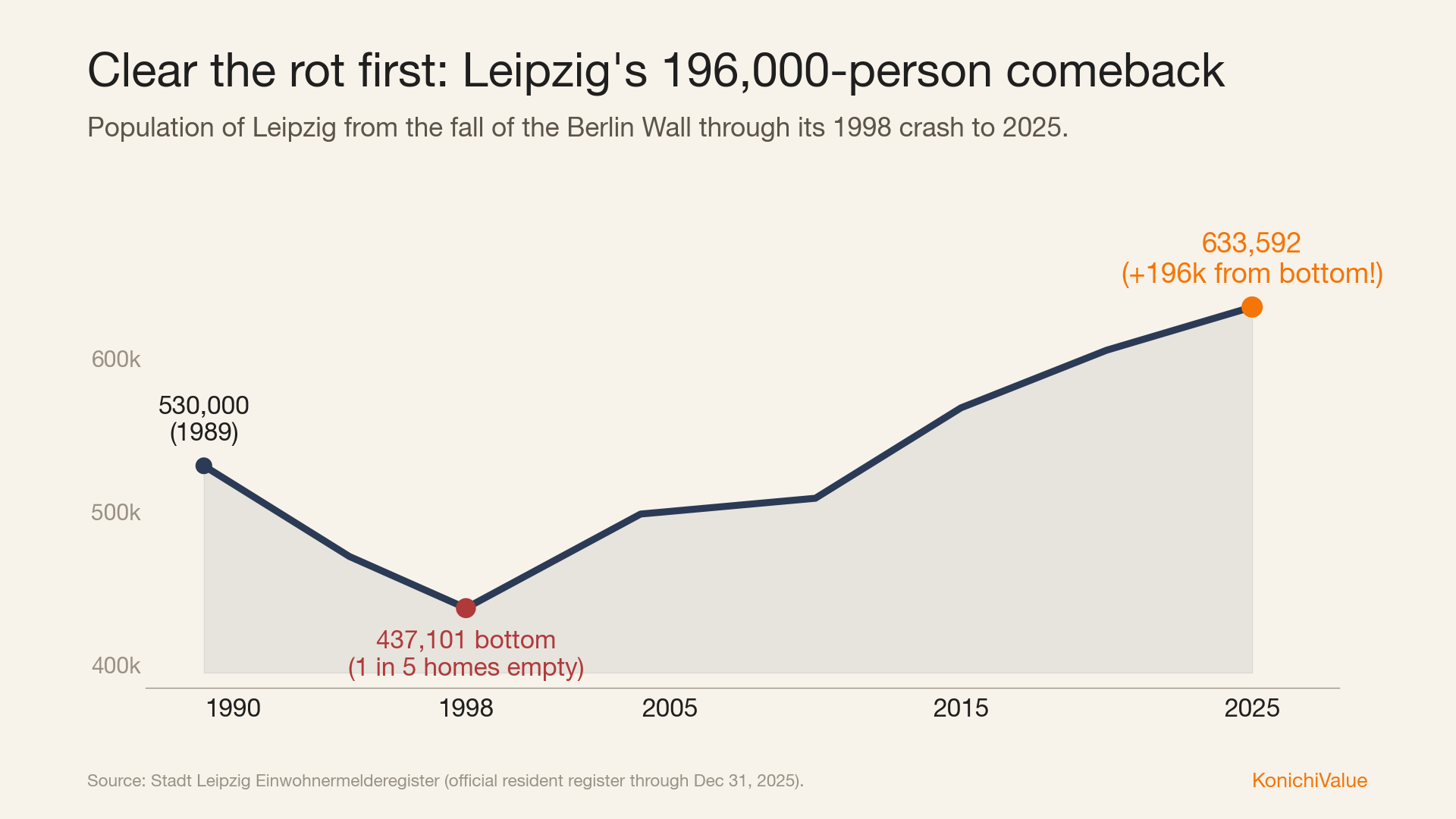
After the Berlin Wall fell, all of East Germany was basically bankrupt, and Leipzig was no exception. Local factories collapsed instantly and nearly 100,000 of its 530,000 residents moved away from the city over the next nine years. Before long, one in five apartments across the entire city stood empty.
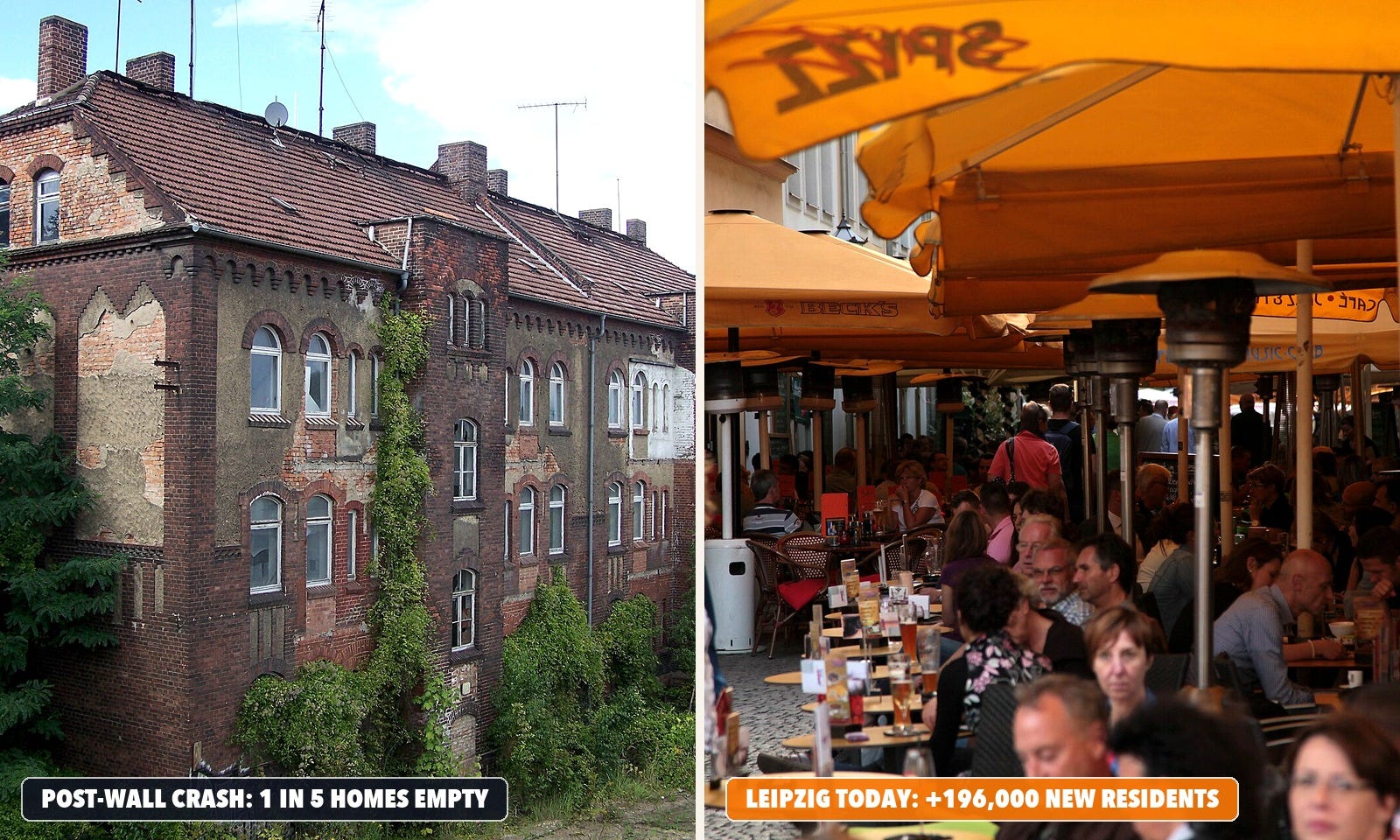
Instead of trying to maintain the city, Leipzig tore down 15,000 ugly communist prefabs on the outskirts and turned the dead concrete into parks. Downtown, to save the gorgeous 19th-century pre-communism brick buildings that broke landlords couldn’t renovate, a local group cooked up Guardian Houses (Wächterhäuser). Artists, students, and scrappy startups got whole historic buildings for €0 rent for five years, on one condition: Pay the heating bill and climb onto the roof once a month to stop rain leaks from rotting the timber.
Free space turned a “dying” factory town into the coolest youth magnet in Germany. Bars, galleries, and startups exploded, Porsche and BMW built factories next door, and Leipzig staged a monster V-shaped comeback:
A dying city is a political choice
Listen to almost any prime minister or billionaire today and you hear only two cures for our future: Have more babies, or grow GDP faster.
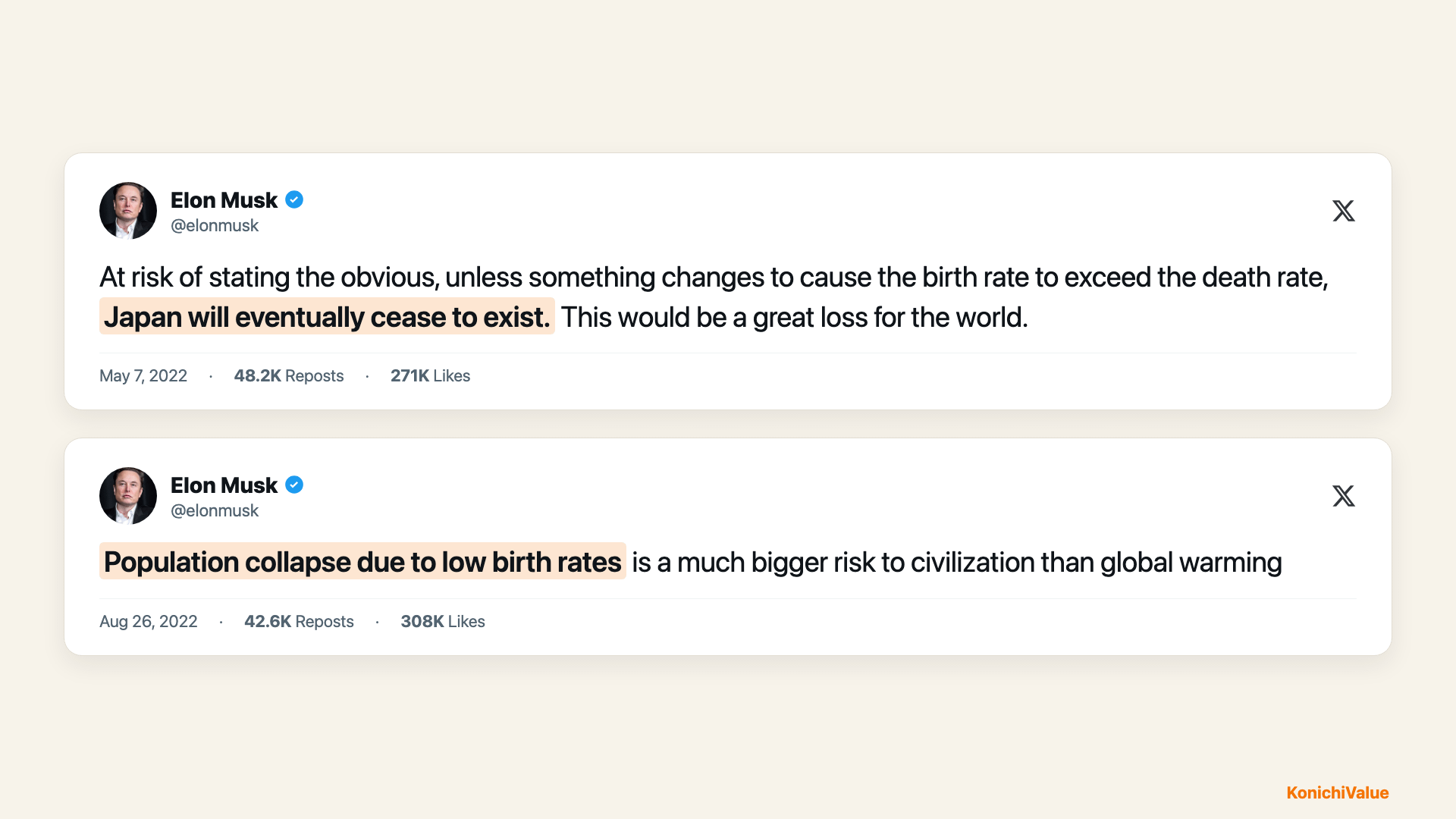
Elon Musk warns constantly that whole countries like Japan will cease to exist unless birth rates rebound. National politicians promise that one more fertility subsidy or economic growth push will magically solve everything.
Will either of those actually save how we live, though?
Look at the United States. It’s the richest country in human history, and one whose population is still growing! Yet look at what half a century of sprawling growth actually gave ordinary Americans: 90-minute highway commutes, starter homes young families under 35 can’t afford, and strip malls paving over every field. Worse still, elderly parents end up trapped alone in suburban cul-de-sacs the day they lose their car keys!
More babies and faster GDP growth won’t save your city from dying. Only politicians brave enough to radically change how cities work will.
Not one of the three comebacks in this story raised its country’s birth rate by even a percent, and not one got lucky with a miracle corporate bailout or magic GDP growth. Instead, brave local leaders shut off the pipes on dead streets and pulled their citizens back together: Onto a ¥100 tram line in Toyama, around solar meadows in Detroit, and inside €0-rent historic buildings in Leipzig.
Over the next thirty years, this demographic wave will hit every rich nation on Earth. Most leaders will take the coward’s way out: Promising a return to the “good ol’ days,” burning billions on corporate tax schemes and bonuses for babies that never arrive, and watching their countries rot into giant Ikeshimas one block at a time.
Cities like Toyama, Detroit and Leipzig have already proven the one truth national politicians are still too scared to tell voters out loud: Yesterday’s population is never coming back, and a smaller city scaled for the people still inside it is a far richer, warmer place to live anyway.
Sources: Yonhap / Korean National Assembly fertility budget audit (June 2024), Nagasaki City report on Ikeshima Island (Feb 2025), City of Toyama compact-city progress report and 2025 transport summary, MLIT compact-city tally (July 2026), City of Detroit Solar Neighborhoods and U.S. Census V2025 estimates, and Stadt Leipzig 2025 population register.