


Disclaimer: This content is for informational purposes only, not investment advice. I may own equities mentioned in this article. Investing involves risk, so always do your own research before buying or selling any securities.

I have a US colleague, let’s call him David, who is really really good at arbitrage investing. Lately he has been obsessed with buying public company spinoffs at the dip and sell them when they reach their fair value.
A couple of days ago, he sent me this:
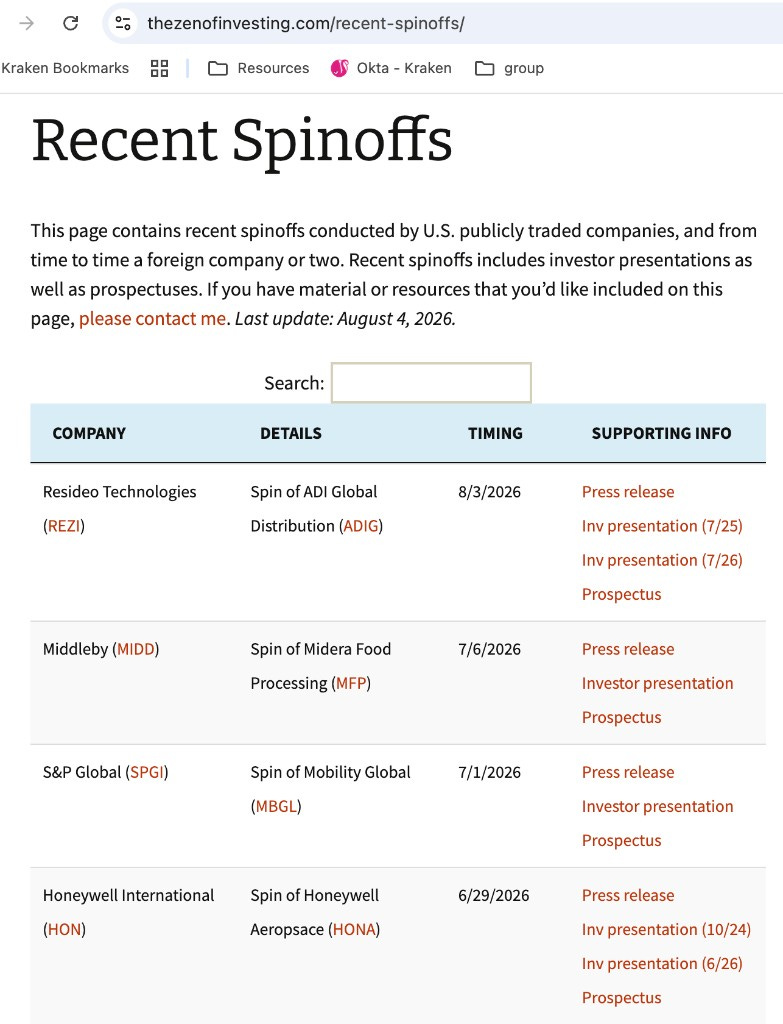
David’s pitch is basically this: When a big company spins off a division, the new shares cannot be picked up by many of the major shareholders. Index funds have to sell them as the spinoff is usually too small for a major index, insiders sell to avoid conflict of interest and a lot of active funds have a different orientation than the spinoff, forcing them to sell too. Basically, almost nobody sell their spinoff shares because the business is bad, but because of arbitrary rules.
And so far, David strategy works. In 15 years, the S&P Spin-off index has risen over 7x in 15 years, far better than the S&P 500.
So I had to ask the obvious question:
Does the spin-off strategy work in Japan?
First off, it’s important to acknowledge just how few spin-offs Japanese companies have had compared to the US.
Why?
You see, until 2017, spinoffs in Japan was taxed just like a corporate sale for the company and its shareholders, meaning it was taxed as pure profit. However, since 2017, reforms have been made to tax them basically the same as in the US, and spin-offs have picked up modestly.
Between 2017 and 2026, exactly five tax-free spinoffs made it to the Tokyo Stock Exchange:
