



Every time Japan’s population crisis trends on X, a weirdly passionate genre of online coping goes viral. It always goes something like this: Someone posts a horrifying chart of Japan’s birth rate falling off a cliff, and just like clockwork, an army of Silicon Valley tech-bros and Western anti-immigration Weeaboos rushes into the replies to insist that “everything is actually totally fine, because AI robots will replace most workers anyways”
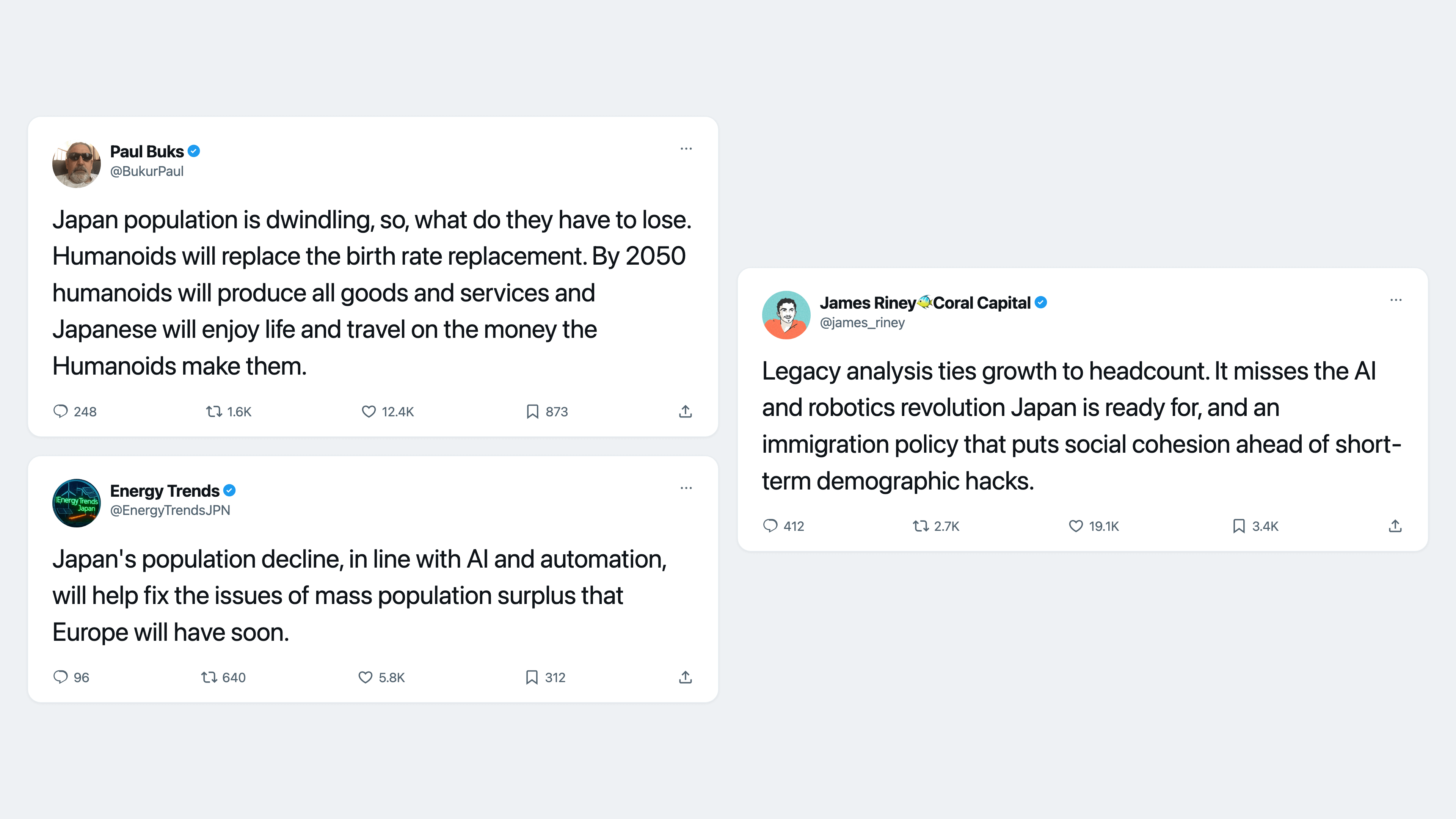
This is the ultimate get-out-of-jail-free card. The idea that humanoid robots will harvest the rice, change the adult diapers, deliver the packages, and wipe down the hospital beds while Japan safely declines into a cozy, automation-powered utopia. No need for immigrants, no need for hard policy choices, just lean back and let the machines do the heavy lifting.
And it isn’t just anonymous blue-checks pushing this cope. METI (Japan’s Ministry of Economics) preaches it. Keidanren (Japan’s business federation) lobbies for it. Every major editorial seems to repeat it these days.
I mean, I’m not naive, I get the logic.
In two years, AI went from getting 1+2 wrong to writing better code than most senior software engineers. If it can replace a programmer, why not a factory worker, nurse or a teacher?
The real world isn’t a database
I am certain software is the easiest job AI will ever get. Strip away the sci-fi marketing, and modern AI is essentially a colossal, probabilistic database. AI thrives in software because code is structured, can be tested before it ships, and when something breaks, you just hit undo. So if your economy is built on software developers, AI will happily replace them.
Japan however, isn’t a software country. If anything, it’s the opposite. It ran a ¥6.7 trillion digital deficit last year, renting cloud services, digital ads and operating systems from America. Japan’s shortage has never been programmers. It’s hands.
And I can already hear you think “Ok, but AI will replace manual labor too, with robots! Japan is just a bit behind in implementation.”
To answer your hypothetical thoughts, yes, Japan is behind in AI, but definitely not in robotics! In fact, the country builds 38% of the world’s industrial robots.
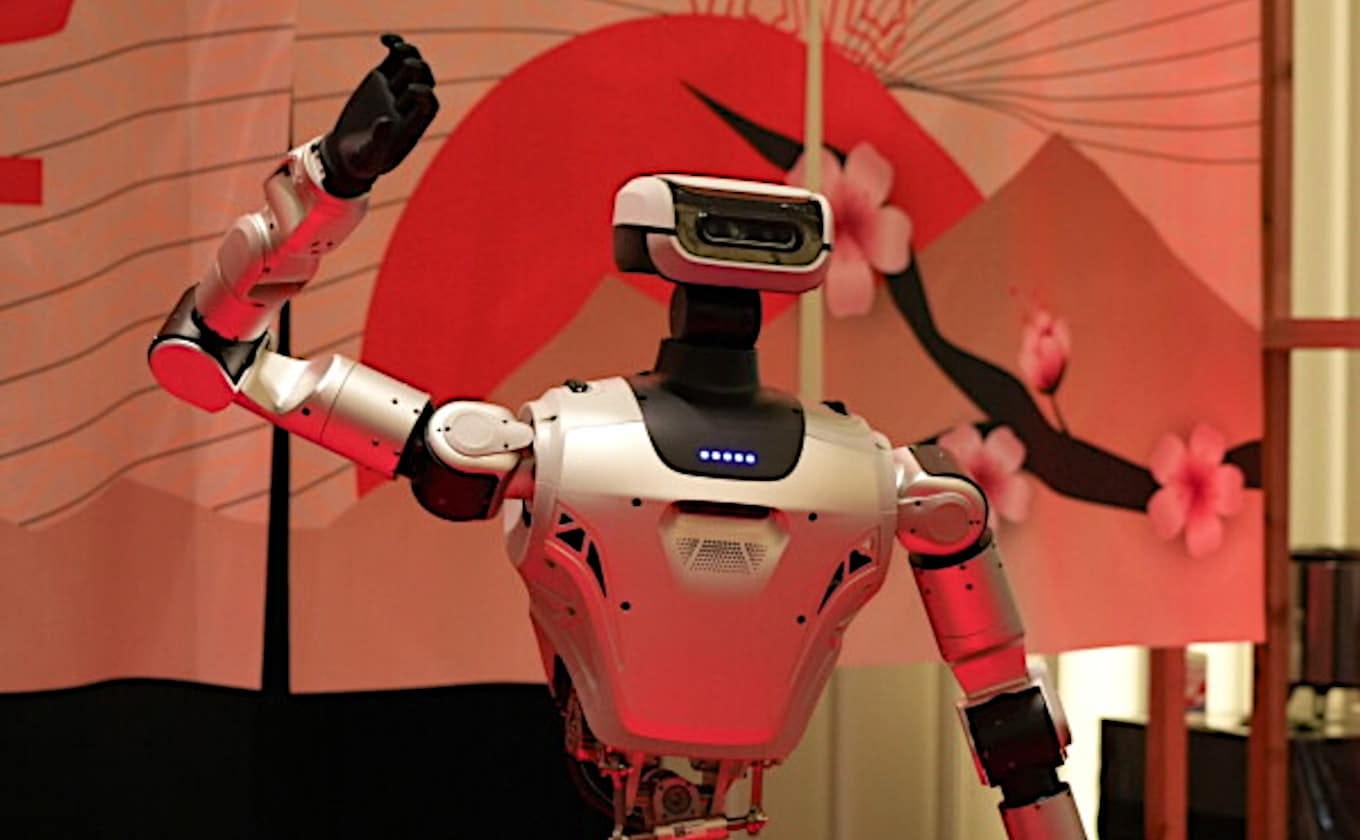
A factory is the closest the physical world gets to what AI is good at. Everything is structured and clean - just like a database. But the thing is, long before the recent AI boom, modern factory floors were already ruthlessly efficient and largely devoid of humans. Sure, AI robots might take the few jobs that are left, but that’s hardly enough to make a difference in Japan’s massive labor shortage.
You know what isn’t structured like a factory? A grandma’s apartment. Neither is a rice paddy after rain, or a three-story walk-up with a fridge on your back. Every task is different, everything is fragile, and nothing comes with an undo button.
Language AI grew capable so fast because we handed it an endless digital library - the internet. But you can't read your way into physical touch. Memorizing a million cookbooks will never teach you the exact micro-pressure needed to peel a peach without turning it into pulp, or to wash a wine glass without snapping the stem.
A person that definitely agrees with me is Ken Goldberg, one of UC Berkeley’s top roboticists. He has pointed out that modern LLMs already ingested 100,000 human-years of text thanks almost exclusively to the internet. All the while, the biggest robotic movement dataset represents barely a single year of physical trial and error. He doesn’t expect general-purpose robots in the next two, five, or even ten years.
Don’t believe him? Just look at the most advanced robots today that are not just a tech demo: The 1X NEO.
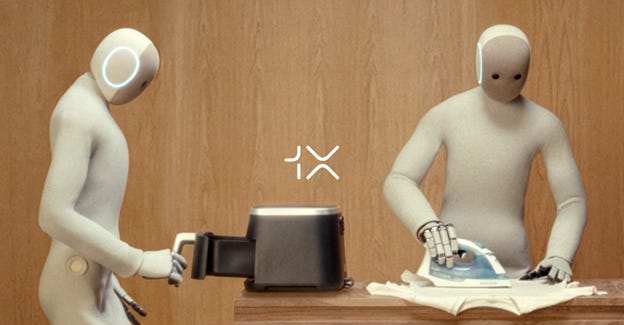
It costs $20,000. Then, to actually use it you need “Expert Mode“: A 1X employee puts on a headset and pilots it remotely...
And sure, AI will help robotics get better faster, but nowhere near the pace of AI in the digital world.
Try automating a nursery
Just for one second, think about the jobs people are claiming AI robots will replace.
Picture a room at a Japanese nursery.
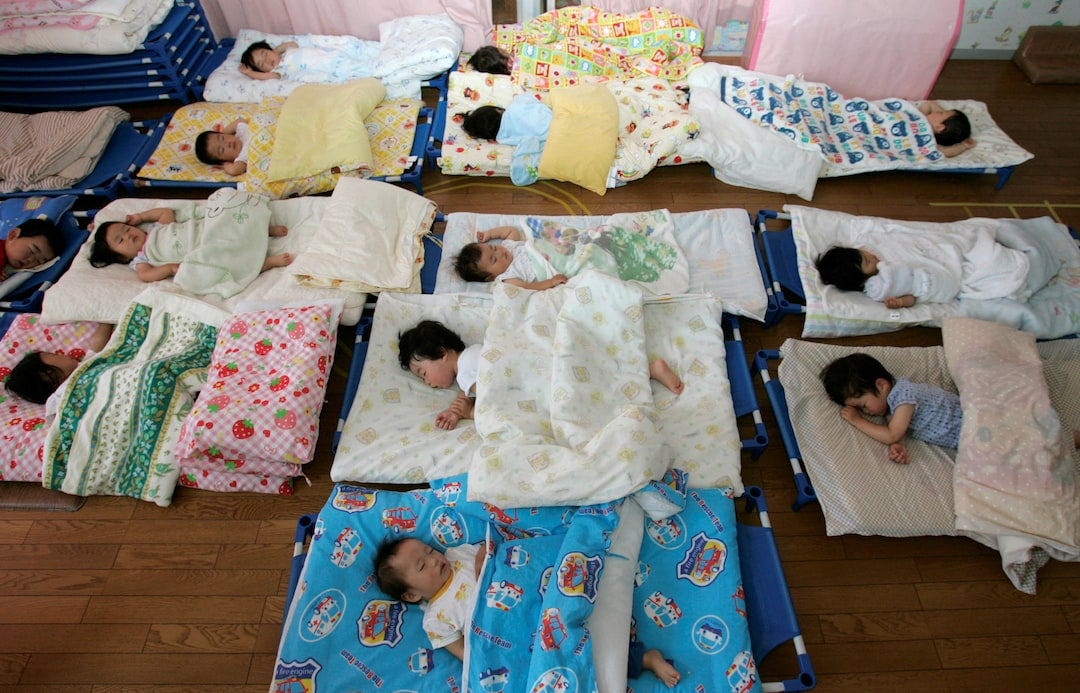
It’s nap time, and according to Japan’s inspector guidelines, staff shall check each sleeping baby every five minutes, touching them to confirm breathing, color, position and temperature.
Then the babies wake up, all at once because one baby starts crying… Now they all need changing, feeding, comforting, and of course, lots of love. One has a fever. One threw her pumpkin on the floor. All of a sudden the earthquake alarm goes! Now, you have to get all babies into an evacuation cart, in under a minute!
If nurseries could find any viable substitute for human staff, they would jump at it in a heartbeat. This year alone, there are 2.54 openings for every nursery job-seeker nationally, and an absurdly high 3.61 roles for every applicant in Tokyo.
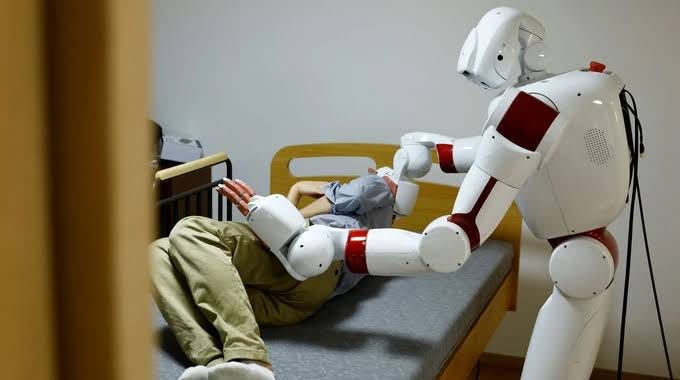
And trust me, Japan is trying to substitute people! In fact, the country already ran an experiment to replace human workers with robots on the other end of the demographic spectrum: Eldercare. After pouring billions of yen into eldercare robots over a decade, the payoff was basically zero.
In 2023, anthropologist James Wright spent months inside a facility that deployed three of them, and released a book on his findings literally called Robots Won’t Save Japan.
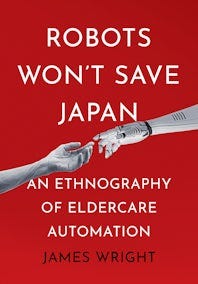
The staff spent their shifts booting them up, sanitizing them, babysitting their movements, and packing them away, all while still having to do most of the care work. Instead of replacing human hands, the machines ended up shoved into storage closets while workers went back to manual care.
Japan is quietly choosing reality
The ultimate irony is that Western commentators hold Japan up as this no-immigration model. Elon Musk just replied “Good” to a video of an anti-immigration rally in Osaka. Australian senator Pauline Hanson holds Japan up in Australia as a model “monoculture”.
But looking at the numbers, Japan’s own government gave up on that fantasy years ago.
The latest story that set of a twitter storm on Japan being anti-immigration was a Telegraph story on the country’s population decline:

What the Telegraph article conveniently left out is that in January this year, the very same government that’s so “hostile” towards immigration, approved the biggest foreign worker intake in Japan’s history: Up to 1,231,900 workers through fiscal 2028, across 19 sectors from care homes to logistics warehouses.
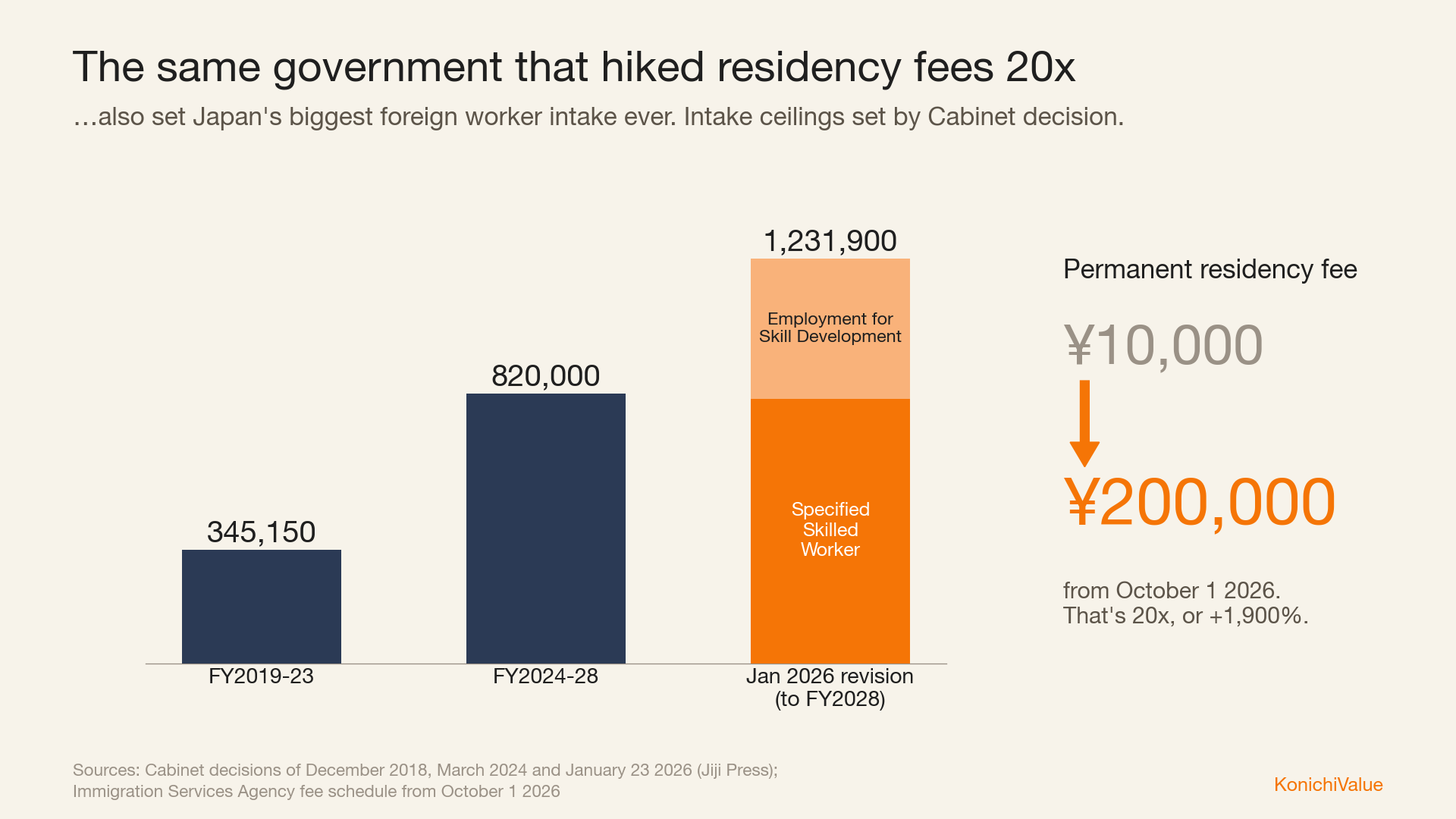
Foreign residents hit 4.13 million at the end of 2025, up 9.5% in a single year. Foreign workers hit a record 2.57 million.
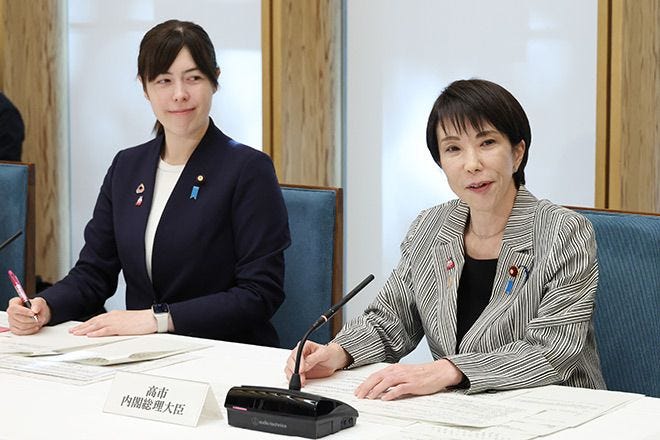
Japan’s leaders are doing it because despite many of them being staunchly anti-immigrant, they can read demographic charts. The biggest window dresser of all, Takaichi, is obsessed with appearing like a true Nationalist by “laying out a comprehensive strategy to fix the population crisis without immigrants”.
I mean, she can say whatever she likes, but the immigration quotas are only moving one way: Up!
My prediction
These are nothing more than my own predictions, so take them with a big grain of salt. With that said, I am certain I am right:
Japan will not stop shrinking in my lifetime. Not under Takaichi, not under whoever comes next, and not with any magical baby-making scheme yet to be invented.
Japanese births will drop below 600,000 by 2031 and foreign residents will pass 5 million before the decade is out. Every government, whatever it says on TV, will keep raising the worker quotas. And no AI robot will be trusted alone in a Japanese baby room for many many years.
I think the fight that actually matters is whether the people coming in get to stay, bring their families and become Japanese. Right now Japan is making that harder, at the exact moment it needs them most.